Trang chủ Blog Trang 12

Đánh giá sách: Tiểu thuyết thứ tư của Wiley Cash, ‘When Ghosts Come Home,’ kết hợp các nhân vật phong phú, bí ẩn hấp dẫn

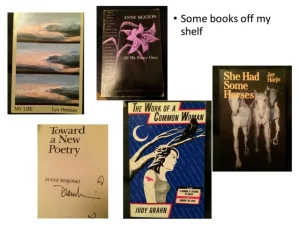
Mercer University Press / "Said-Songs: Essays on Poetry and Place"
"WHEN GHOSTS COME HOME" của Wiley Cash (William Morrow, 304 trang, $29).
Contributed Photo from Chapter 16 / Jesse Graves
Contributed Photo from Chapter 16 / Jesse Graves Ảnh do Mallory Cash / Wiley Cash đóng góp

Wiley Cash, tác giả của “A Land More Kind Than Home”, “This Dark Road to Mercy” và “The Last Ballad”, trở lại với tác phẩm mới nhất của mình, “When Ghosts Come Home” ấm áp và vô cùng dễ đọc.

Lấy bối cảnh năm 1984 tại thị trấn ven biển nhỏ Oak Island của Bắc Carolina, “When Ghosts Come Home” mở đầu bằng cảnh một chiếc máy bay bay thấp vào sáng sớm đánh thức Winston Barnes 63 tuổi và người vợ mắc bệnh ung thư của ông, Marie. Mặc dù Winston, cảnh sát trưởng nguyên tắc và tốt bụng của thị trấn, đã có một cảm giác kỳ lạ và nói với người yêu Marie rằng anh sẽ đến sân bay để điều tra, một cuộc gọi điện thoại từ bộ phận điều phối, ám chỉ về một vụ tai nạn máy bay có thể xảy ra, đã nhanh chóng thúc đẩy anh hành động.

Khi Cảnh sát trưởng Barnes đến, ông thực sự tìm thấy một chiếc máy bay bị rơi, kỳ lạ là trống rỗng, nhưng tình trạng của máy bay không phải là bí ẩn duy nhất mà cảnh sát trưởng phải đối mặt. Gần đó, ông phát hiện ra thi thể của Rodney Bellamy, một người đàn ông da đen, con trai của một giáo viên lịch sử trung học địa phương và là nhà lãnh đạo dân quyền, đã bị giết bởi một phát súng. Các cảnh sát trưởng và những người khác nhanh chóng đến hiện trường đã nhanh chóng liên kết hai vụ việc này là kết quả của một vụ buôn bán ma túy bất thành, nhưng Cảnh sát trưởng Barnes không chắc chắn như vậy. Ông tin rằng có thể có điều gì đó khác đang diễn ra trên Đảo Oak — điều gì đó liên quan đến những người mà ít người khác có thể ngờ tới.

Mặc dù “When Ghosts Come Home” thực sự là một tiểu thuyết bí ẩn — một tiểu thuyết đòi hỏi (và đưa ra) câu trả lời — nhưng độc giả nên đọc cuốn sách này với sự hiểu biết rằng có nhiều điều hơn thế nữa trong những trang sách này chứ không chỉ là một bí ẩn đơn thuần cần được giải quyết. Đây là một cuốn sách giàu tính nhân vật, đồng thời khéo léo đan xen các cốt truyện phụ liên quan đến chính trị, tham nhũng và phân biệt chủng tộc.

Thông tin thêm

Tác giả xuất hiện / Wiley Cash sẽ thảo luận về “When Ghosts Come Home” tại Lễ hội sách miền Nam trực tuyến năm 2021 lúc 4:15 chiều CDT ngày 9 tháng 10. Tìm hiểu thêm tại sofestofbooks.org.

Nhiều cốt truyện phụ này xoay quanh Cảnh sát trưởng Barnes khi ông cố gắng chấp nhận vị thế đang phai nhạt của mình tại một thị trấn dường như muốn bỏ lại ông để đến với một khuôn mặt mới, tươi mới trong cuộc bầu cử sắp tới. Barnes là một người đàn ông tốt bụng, đàng hoàng — một người đàn ông, mặc dù có một khoảnh khắc trong quá khứ ám ảnh mình, nhưng vẫn tích cực cố gắng làm điều đúng đắn và công bằng. Nếu đối thủ của ông giống như ông, thì sự sụp đổ của ông có thể không quá khó khăn; tuy nhiên, đối thủ của ông, Bradley Frye, không giống ông chút nào. Frye kiêu ngạo và phân biệt chủng tộc. Cảnh sát trưởng Barnes nhớ ông là “một trong những chàng trai địa phương chất đồ lên xe tải để quấy rối và đánh đập những sinh viên da đen biểu tình ngay trên đường ở Wilmington”.

Để thể hiện đầy đủ sự tách biệt giữa hai người đàn ông, Cash viết, “Winston quen với việc bắt giữ những người đàn ông như Bradley Frye vì lái xe khi say rượu hoặc đón gái mại dâm hơn là chống lại họ trong một cuộc bầu cử.” Sự thất vọng của Cảnh sát trưởng Barnes khi thấy những người khác ủng hộ đối thủ không xứng đáng của mình — và chứng kiến ​​anh ta từ từ bắt đầu xử lý việc rất nhiều người xung quanh anh ta vô danh dự và tàn nhẫn như thế nào — thật đau lòng.

Trong khi câu chuyện của Cảnh sát trưởng Barnes là linh hồn của “When Ghosts Come Home”, thì hai câu chuyện khác cũng quan trọng không kém đối với toàn bộ cuốn tiểu thuyết. Câu chuyện về Colleen, con gái của Barneses đang cố gắng hồi phục sau một thai kỳ không may, chứng minh rằng việc thoát khỏi những bóng ma ám ảnh chúng ta có thể khó khăn như thế nào. Jay, một thành viên tuổi teen của gia đình Bellamy với quá khứ rắc rối của riêng mình, cũng đưa ra một góc nhìn quan trọng, cảm động về việc phân biệt chủng tộc không chỉ tồn tại trong thế giới người lớn, khi anh quan sát người bạn da trắng thân thiết của mình, Cody, không bao giờ vào nhà Jay, rời khỏi trận bóng rổ sớm để sử dụng phòng tắm riêng và thậm chí từ chối uống một ngụm nước từ vòi nước ngoài trời của Jay.

Cash viết bằng văn xuôi dễ hiểu, trôi chảy đến mức dễ bị lạc vào tác phẩm của anh. Nhưng phong cách không phải là lý do duy nhất khiến cuốn tiểu thuyết mới nhất của anh hấp dẫn đến vậy. Đây là một cuốn tiểu thuyết hợp thời, mặc dù chắc chắn là đen tối, nhưng cũng yêu cầu chúng ta tin vào hy vọng — vào sự cứu rỗi. Với “When Ghosts Come Home”, Cash mang đến loại sách mà nhiều người trong chúng ta khao khát.

Để biết thêm thông tin về sách địa phương, hãy truy cập Chapter16.org, ấn phẩm trực tuyến của Humanities Tennessee.


Book review: Wiley Cash’s fourth novel, ‘When Ghosts Come Home,’ combines rich characters, compelling mystery

"WHEN GHOSTS COME HOME" by Wiley Cash (William Morrow, 304 pages, $29).

Wiley Cash, author of “A Land More Kind Than Home,” “This Dark Road to Mercy” and “The Last Ballad,” returns with his latest offering, the warm and immensely readable “When Ghosts Come Home.”

Set in 1984 in the small North Carolina coastal town of Oak Island, “When Ghosts Come Home” opens as an early-morning, low-flying airplane awakens 63-year-old Winston Barnes and his cancer-stricken wife, Marie. Although Winston, the town’s principled and kind sheriff, already has a peculiar feeling and tells his beloved Marie that he is going to the airport to investigate, a phone call from dispatch, which hints at a possible plane crash, quickly spurs him into action.

When Sheriff Barnes arrives, he indeed finds a crashed, oddly empty plane, but the plane’s condition isn’t the only mystery the sheriff has on his hands. Nearby, he uncovers the body of Rodney Bellamy, a Black man who is the son of a local high school history teacher and civil-rights leader, killed by a gunshot. Deputies and others who soon arrive on the scene are quick to link the two as being the result of a drug deal gone bad, but Sheriff Barnes isn’t so sure. He believes something else might very well be afoot on Oak Island — something involving people few others would ever suspect.

While “When Ghosts Come Home” is very much a mystery novel — one that demands (and delivers) answers — readers should go into the book knowing that there is much more within these pages than a simple mystery to be solved. This is a book rich in character that also expertly weaves subplots dealing with politics, corruption and racism.

More Info

Author appearance /Wiley Cash will discuss “When Ghosts Come Home” at the online 2021 Southern Festival of Books at 4:15 p.m. CDT Oct. 9. Learn more at sofestofbooks.org.

Many of these subplots revolve around Sheriff Barnes as he tries to accept his fading status in a town that seems to want to leave him behind for a fresh, new face in the upcoming election. Barnes is a good, decent man — a man who, although he has a moment from his past that haunts him, actively tries to do the right and fair thing. If his opponent were like him, his fall might not be so hard; however, his opponent, Bradley Frye, is nothing like him. Frye is arrogant and racist. Sheriff Barnes remembers him as being “one of the local boys who’d load up in trucks to harass and beat up Black students protesting just up the road in Wilmington.”

To fully show the separation between the two men, Cash writes, “Winston was more accustomed to arresting men like Bradley Frye for drunk driving or picking up prostitutes than he was standing against them in an election.” Sheriff Barnes’ disappointment in seeing others support his unworthy challenger — and watching as he slowly begins to process how dishonorable and cruel so many of the people around him are — is heartbreaking.

While Sheriff Barnes’ story is the soul of “When Ghosts Come Home,” two other narratives are just as vital to the novel’s whole. The story of Colleen, the Barneses’ daughter who is trying to recover from an ill-fated pregnancy, proves how difficult it can be to escape the ghosts that haunt us. Jay, a teen member of the Bellamy family with his own troubling past, also offers a crucial, affecting perspective on how racism isn’t something that only exists in the adult world, as he observes how his close white friend, Cody, never goes inside Jay’s house, leaves their basketball games early to use his own bathroom and even refuses a sip of water from Jay’s outdoor hose.

Cash writes in such accessible, smooth prose that it’s easy to get lost inside his work. But style is not the only reason his latest novel is so consuming. This is a timely novel that, while certainly dark, also asks us to believe in hope — in redemption. With “When Ghosts Come Home,” Cash delivers the kind of book so many of us crave.

For more local book coverage, visit Chapter16.org, an online publication of Humanities Tennessee.

Source link

Bệnh dịch hạch Athen: 430 TCN – 426 TCN (Phần 2)

The Great Plague of Athens Has Eerie Parallels to Today - The Atlantic

The Athenian Plague: 430 B.C. – 426 B.C. (Part 2)

Bởi   |  


William Sutherland là một nhà thơ và nhà văn. Ông là tác giả của ba cuốn sách, “Thơ, Lời cầu nguyện và Haiku” (1999), “Mùa xuân Nga” (2003) và “Aaliyah Remembered: Her Life & The Person Behind the Mystique” (2005) và đã được xuất bản trong các tuyển tập thơ. vòng quanh thế giới. Ông đã được giới thiệu trong “Ai là ai trong các nhà thơ mới” (1996), “Quốc tế là ai trong thơ” (2004), và là thành viên của “Đại sứ Danh dự Thơ Quốc tế.” Ông cũng là người đóng góp cho Wikipedia, trang bách khoa toàn thư trực tuyến số một.


Chẳng bao lâu sau, nhuệ khí của người Athen đã sa sút hẳn. Trong một nỗ lực để thúc đẩy tinh thần đang suy sụp của người dân và khôi phục lại niềm tin mà họ đã mất, Pericles đã nói về sự vĩ đại của Thành phố trong “lễ tang công khai” hàng năm được tổ chức để tôn vinh những người đã chết trong chiến tranh của cô.

“Hình thức chính phủ của chúng tôi không có sự cạnh tranh với các thể chế của những người khác. Chúng tôi không sao chép những người hàng xóm của chúng tôi, nhưng là một ví dụ cho họ. … Chúng ta được gọi là một nền dân chủ, vì chính quyền nằm trong tay của nhiều người chứ không phải ít, ”nhà lãnh đạo Athen tuyên bố. “Không có gì độc quyền trong cuộc sống công cộng của chúng tôi… chúng tôi là những người yêu cái đẹp, nhưng đơn giản trong thị hiếu của chúng tôi, và chúng tôi tu dưỡng tâm trí mà không mất đi sự nam tính. Của cải chúng ta sử dụng, không phải để nói và phô trương, mà là khi chúng ta sử dụng nó thực sự. Đối với chúng ta nghèo đói không phải là điều đáng hổ thẹn; sự ô nhục thực sự là không làm gì để tránh nó. Một công dân Athen không bỏ bê nhà nước vì anh ta chăm sóc hộ gia đình của riêng mình; và ngay cả những người trong chúng ta, những người đang tham gia vào lĩnh vực kinh doanh đều có một ý tưởng rất công bằng về chính trị, ”Anh ấy nói thêm trước khi đề cập đến lòng dũng cảm của các hậu vệ của Thành phố, những người đã ngã xuống trong trận chiến. “Điều ám chỉ rằng một cái chết chẳng hạn như của họ… mang lại thước đo thực sự cho giá trị của một người đàn ông; nó có thể là sự tiết lộ đầu tiên về các đức tính của anh ta… Và khi thời điểm đến, họ có ý định chống lại và đau khổ, thay vì bay và cứu mạng sống của họ; … Trên chiến trường, đôi chân của họ đứng nhanh, và ngay lập tức, ở đỉnh cao tài sản của họ, họ đã qua đời không phải vì sợ hãi, mà vì vinh quang của họ. Đó là sự kết thúc của những người đàn ông này; họ xứng đáng với Athens. ” và ngay lập tức, ở đỉnh cao tài sản của họ, họ đã ra đi khỏi hiện trường, không phải vì sợ hãi, mà vì vinh quang của họ. Đó là sự kết thúc của những người đàn ông này; họ xứng đáng với Athens. ” và ngay lập tức, ở đỉnh cao tài sản của họ, họ đã ra đi khỏi hiện trường, không phải vì sợ hãi, mà vì vinh quang của họ. Đó là sự kết thúc của những người đàn ông này; họ xứng đáng với Athens. “[1]

Tuy nhiên, dịch bệnh quá lớn đối với người Athens, điều này còn tồi tệ hơn bởi mùa hè nóng nực như Diodorus Siculus mô tả – “những cơn gió etesian… mà thông thường, hầu hết nhiệt vào mùa hè được làm mát không thổi được; và khi sức nóng tăng lên và không khí bốc lửa, cơ thể của cư dân, không có bất cứ thứ gì để làm mát họ, lãng phí đi. ” [2]

Trật tự xã hội sụp đổ khi nhiều người bị bỏ rơi cùng với bạn bè và gia đình ốm yếu của họ vì “các hiến pháp mạnh và yếu đều không có khả năng phản kháng…” [3]Đối với Thucydides, đây là phần tồi tệ nhất của trận dịch – “Cho đến nay, đặc điểm khủng khiếp nhất của căn bệnh này là sự từ chối đảm bảo khi bất kỳ ai cảm thấy bản thân bị ốm, vì sự tuyệt vọng mà họ rơi vào đó ngay lập tức đã lấy đi sức đề kháng của họ, và để lại cho họ một con mồi dễ dàng hơn nhiều cho sự rối loạn; Bên cạnh đó, có cảnh tượng khủng khiếp của những người đàn ông chết như cừu, mặc dù đã bị nhiễm trùng khi nuôi dưỡng nhau. … Mặt khác, nếu họ ngại đến thăm nhau, họ đã bỏ mạng vì bị bỏ rơi; thực sự nhiều ngôi nhà đã bị bỏ trống… vì muốn có một y tá: mặt khác, nếu họ mạo hiểm làm như vậy, hậu quả là cái chết ”. [4]

Đồng thời, như đã đề cập trước đó, nhiều người bị ảnh hưởng bởi bệnh dịch hạch đã ném mình vào các bể chứa và bể chứa nước – “… tất cả các bệnh phổ biến vào thời điểm đó đều được phát hiện là kèm theo sốt, nguyên nhân là do quá nhiệt. Và đây là lý do tại sao hầu hết những người ốm yếu lao mình vào các bể chứa và suối nước nóng để làm mát cơ thể của họ, ” [5] Diodorus Siculus nói thêm. Một số người thậm chí còn bị cắt cụt tứ chi như ngón tay, ngón chân trong nỗ lực sống sót trong tuyệt vọng. “[N] những thi thể không được chôn cất đáng kể đã bị bỏ lại ở đây và ở đó.” [6]

Per Thucydides, “Xác của những người sắp chết nằm chồng lên nhau, và những sinh vật sống dở chết dở quay cuồng trên đường phố và tụ tập quanh tất cả các đài phun nước trong niềm khao khát được cấp nước. Những nơi linh thiêng nơi họ từng khai thác đầy xác chết… vì khi thảm họa vượt qua mọi giới hạn, những người đàn ông, không biết điều gì sẽ xảy ra với họ, trở nên hoàn toàn bất cẩn với mọi thứ… Tất cả các nghi thức chôn cất trước khi được sử dụng đều hoàn toàn khó chịu, và họ chôn xác tốt nhất có thể… [Gỗ dùng làm giàn thiêu, trở nên khan hiếm.] Đôi khi, bắt đầu từ những người chất thành đống, họ ném xác chết của chính mình lên giàn thiêu của người lạ và đốt nó… Sợ các vị thần hay luật pháp không có gì để hạn chế họ… Không ai mong đợi sẽ bị đưa ra xét xử vì hành vi phạm tội của mình, nhưng mỗi người đều cảm thấy rằng một bản án nghiêm khắc hơn rất nhiều đã được thông qua. ”[7] Ngay cả dã thú và chim săn mồi cũng tránh chết – “Tất cả các loài chim và thú săn mồi trên cơ thể người, hoặc kiêng chạm vào chúng, hoặc chết sau khi nếm chúng. Để chứng minh điều này, người ta nhận thấy rằng những loài chim thuộc loại này đã thực sự biến mất; họ không nói về các thi thể, hoặc thực sự để được nhìn thấy, “Thucydides viết. [số 8]

Không ai chắc chắn rằng họ sẽ sống sót vì có vẻ như tất cả mọi người bất chấp các biện pháp phòng ngừa mà họ đã đề phòng, đều đổ bệnh – “Người Athen tránh nhau nhưng dù sao cũng bỏ mạng”, [9] hầu hết đều phớt lờ “tiếng rên rỉ của người sắp chết” [10] khi họ “Vội vàng để thỏa mãn thị hiếu của họ, và bỏ rơi mình cho sự sa đọa đạo đức lớn nhất.” [11]

Per Thucydides, “Đàn ông giờ đây đã mạo hiểm tuyệt đối với những gì họ đã làm trước đây ở một góc, và không chỉ như họ muốn, khi nhìn thấy những chuyển đổi nhanh chóng tạo ra bởi những người đang thịnh vượng đột ngột chết và những người trước đây không có gì thành công với tài sản của họ. Vì vậy, họ quyết tâm chi tiêu nhanh chóng và tận hưởng bản thân, coi cuộc sống và sự giàu có của họ như những thứ giống nhau trong ngày. Sự kiên trì đối với thứ mà đàn ông gọi là danh dự không ai phổ biến, không chắc họ có được tha để đạt được đối tượng hay không; nhưng người ta đã giải quyết rằng sự hưởng thụ hiện tại, và tất cả những gì đóng góp vào nó, đều là danh dự và hữu ích. Không có gì để ngăn cản họ. Về phần thứ nhất, họ đánh giá nó giống nhau cho dù họ có thờ phượng họ hay không, vì họ thấy tất cả đều giống nhau bị diệt vong; và cuối cùng,[12]

Đồng thời, với 25% dân số Thành phố đã chết, người dân đã bật mí về lãnh đạo của họ. Họ đổ lỗi cho Pericles, người mà họ coi là “tác giả của cuộc chiến” [13] về sự bùng nổ (vì chiến lược của anh ta là đưa mọi người vào trong các bức tường của Thành phố mặc dù anh ta “không có giải pháp thay thế [khả thi] nào… vì nó sẽ là tự sát để giao chiến với bộ binh [Lacedæmonian] lớn hơn và được huấn luyện tốt hơn ” [14] ở vùng nông thôn Attica) và thậm chí thúc giục đầu hàng theo yêu cầu của Lacedæmoniac. Theo Diodorus Siculus, “Người Athen, bây giờ cây cối ở vùng quê của họ đã bị đốn hạ (bởi những người Lacedæmonians tàn phá vùng đất của họ) và bệnh dịch đang hoành hành với số lượng lớn, đã rơi vào tuyệt vọng và trở nên tức giận với Pericles…” [15 ]Điều này đã khuyến khích các đối thủ chính trị của Pericles, Kleon, Simmias và Lakratidas, khởi kiện chống lại anh ta với lý do phù phiếm là “quản lý công quỹ kém”. [16]

Khi giải quyết các cáo buộc, Pericles nói với sự cương quyết, không đưa ra lời xin lỗi – “Tôi đã mong đợi sự phẫn nộ bùng phát này; Tôi không biết nguyên nhân của nó… Tôi cho phép rằng đối với những người đàn ông thịnh vượng và tự do lựa chọn thì việc gây chiến là một điều tuyệt vời. Nhưng khi họ phải phục tùng và ngay lập tức đầu hàng độc lập, hoặc tấn công và được tự do, thì kẻ trốn tránh chứ không phải kẻ gặp nguy hiểm đáng bị đổ lỗi. Về phần mình, tôi vẫn là một người đàn ông như vậy và đứng ở vị trí mà tôi đã làm. Nhưng bạn đã thay đổi; vì bạn đã bị điều khiển bởi sự bất hạnh khi nhớ lại sự đồng ý mà bạn đã đưa ra khi bạn chưa bị tổn thương, và nghĩ rằng lời khuyên của tôi là sai bởi vì nhân vật của bạn yếu ớt … Bất cứ điều gì đột ngột và bất ngờ và hoàn toàn nằm ngoài tính toán, thật là một thảm họa cho ví dụ như bệnh dịch này đến với những bất hạnh khác, mê hoặc tinh thần của một người đàn ông. ” Khi nói chuyện với Athena Ecclesia, Pericles vẫn thúc giục lòng can đảm và sức mạnh đồng thời kêu gọi sự hiểu biết – “… là công dân của một thành phố vĩ đại và được giáo dục trong một tính khí vĩ đại, bạn không nên khuất phục trước những tai họa dù quá lớn hay làm cho bóng tối của danh tiếng của bạn… Bạn không được dẫn dắt đi theo lời khuyên của những công dân như [những người tố cáo Pericles] này, cũng như không được tức giận với tôi; vì giải pháp có lợi cho chiến tranh là của riêng bạn cũng như của tôi. Điều gì sẽ xảy ra nếu kẻ thù đã đến và làm điều mà hắn nhất định phải làm khi bạn không chịu nhượng bộ? Điều gì cũng xảy ra nếu bệnh dịch theo sau? Đó là một cú đánh bất ngờ… Tôi biết rõ rằng sự căm ghét của bạn đối với tôi đang trở nên trầm trọng hơn vì điều đó. Nhưng thật oan ức… ” Pericles vẫn thúc giục lòng can đảm và sức mạnh trong khi kêu gọi sự hiểu biết – “… là công dân của một thành phố vĩ đại và được giáo dục trong tính khí của sự vĩ đại, bạn không nên khuất phục trước những tai họa quá lớn, hoặc làm mờ đi ánh sáng của danh tiếng của bạn… Bạn không được dẫn dắt tránh xa lời khuyên của những công dân như [những người tố cáo Pericles] này, và cũng đừng tức giận với tôi; vì giải pháp có lợi cho chiến tranh là của riêng bạn cũng như của tôi. Điều gì sẽ xảy ra nếu kẻ thù đã đến và làm điều mà hắn nhất định phải làm khi bạn không chịu nhượng bộ? Điều gì cũng xảy ra nếu bệnh dịch theo sau? Đó là một cú đánh bất ngờ… Tôi biết rõ rằng sự căm ghét của bạn đối với tôi đang trở nên trầm trọng hơn vì điều đó. Nhưng thật oan ức… ” Pericles vẫn thúc giục lòng can đảm và sức mạnh trong khi kêu gọi sự hiểu biết – “… là công dân của một thành phố vĩ đại và được giáo dục trong tính khí của sự vĩ đại, bạn không nên khuất phục trước những tai họa quá lớn, hoặc làm mờ đi ánh sáng của danh tiếng của bạn… Bạn không được dẫn dắt tránh xa lời khuyên của những công dân như [những người tố cáo Pericles] này, và cũng đừng tức giận với tôi; vì giải pháp có lợi cho chiến tranh là của riêng bạn cũng như của tôi. Điều gì sẽ xảy ra nếu kẻ thù đã đến và làm điều mà hắn nhất định phải làm khi bạn không chịu nhượng bộ? Điều gì cũng xảy ra nếu bệnh dịch theo sau? Đó là một cú đánh bất ngờ… Tôi biết rõ rằng sự căm ghét của bạn đối với tôi đang trở nên trầm trọng hơn vì điều đó. Nhưng thật oan ức… ” hoặc làm đen bóng danh tiếng của bạn… Bạn không được dẫn dắt đi theo lời khuyên của những công dân như [những người tố cáo Pericles] này, cũng như không được tức giận với tôi; vì giải pháp có lợi cho chiến tranh là của riêng bạn cũng như của tôi. Điều gì sẽ xảy ra nếu kẻ thù đã đến và làm điều mà hắn nhất định phải làm khi bạn không chịu nhượng bộ? Điều gì cũng xảy ra nếu bệnh dịch theo sau? Đó là một cú đánh bất ngờ… Tôi biết rõ rằng sự căm ghét của bạn đối với tôi đang trở nên trầm trọng hơn vì điều đó. Nhưng thật oan ức… ” hoặc làm đen bóng danh tiếng của bạn… Bạn không được dẫn dắt đi theo lời khuyên của những công dân như [những người tố cáo Pericles] này, cũng như không được tức giận với tôi; vì giải pháp có lợi cho chiến tranh là của riêng bạn cũng như của tôi. Điều gì sẽ xảy ra nếu kẻ thù đã đến và làm điều mà hắn nhất định phải làm khi bạn không chịu nhượng bộ? Điều gì cũng xảy ra nếu bệnh dịch theo sau? Đó là một cú đánh bất ngờ… Tôi biết rõ rằng sự căm ghét của bạn đối với tôi đang trở nên trầm trọng hơn vì điều đó. Nhưng thật oan ức… ”[17]

Đến lúc đó, cơn giận dữ quá mạnh khiến cho lời bào chữa của Pericles rơi vào tai điếc. Ông bị phạt từ 15 đến 80 nhân tài và bị tước bỏ quyền lực. Sau đó, theo Telemachus Timayenis, Pericles “bình tĩnh trước phiên tòa khủng khiếp này, bản chất thể chất của anh ta giờ đây đã chống chọi lại những đau khổ đáng sợ nhất. Dịch bệnh không chừa một ai, đã cướp đi nhiều người bạn thân nhất của ông và nhiều người thân của ông, bao gồm cả [người vợ đầu tiên], em gái ông và các con trai của ông là Xanthippus và Paralus. Người đã rất nhiều lần nhấn mạnh vào lòng dũng cảm và lòng dũng cảm nơi đồng bào của mình, và đã thể hiện mình xứng đáng với lời nói của mình, khi chứng kiến ​​đứa con trai yêu quý của mình là Paralus đã chết, và đã đến gần để đặt vòng hoa lên đầu người yêu dấu đó, có thể không kìm chế được bản thân, và lần đầu tiên trong đời anh ấy đã khóc một cách cay đắng ”. [18] Anh ấy cũng dành sự quan tâm nồng nhiệt tương tự đối với những người bạn thân thiết của mình, những người mà anh ấy cũng thương tiếc khi họ trở thành nạn nhân của bệnh dịch, chứng tỏ rằng “đằng sau nguồn dự trữ gần như băng giá của anh ấy là một trái tim ấm áp và giàu tình cảm.” [19]

Tuy nhiên, vào tháng 9 năm 430 trước Công nguyên, người Athen đã thay đổi tâm hồn “cảm thấy hối hận” [20], đặc biệt là khi họ “thấy những người kế vị của ông ta kém cỏi đến mức nào.” [21] Họ bầu Pericles, người cũng đã bắt đầu chịu ảnh hưởng của bệnh dịch trở lại văn phòng cũ của anh ấy là “Strategos.” Tuy nhiên, chỉ có sự thuyết phục của những người bạn thân thiết nhất của anh mới thuyết phục được Pericles một lần nữa “nắm quyền điều hành công việc”, mà sau đó anh đã sử dụng để xin phép người Athens bỏ qua luật quốc tịch mà anh đã ban hành vào năm 451 trước Công nguyên để cấp cho đứa con trai “ngoài giá thú” của mình, người mà anh yêu đến hơi thở cuối cùng, quốc tịch Athen. [22] Pericles đã yêu cầu một ngoại lệ vì đứa con trai sống sót này đã được sinh ra với tình nhân của anh ta, một phụ nữ Milesia xinh đẹp có học thức, Aspasia (470 TCN-410 TCN), người đã bất chấp khuôn mẫu thời đó bằng cách lợi dụng địa vị không phải là người Athen của mình để trở thành “Một nhà văn vĩ đại … và một nhà triết học.” [23]

Sau đó với sự chỉ huy của Pericles, cuộc chiến dường như đã diễn ra tốt đẹp. Cuộc bao vây Potidæa, được kích hoạt bởi một cuộc nổi dậy phổ biến chống lại Athens đã kết thúc vào tháng 1 năm 429 trước Công nguyên khi quân đội Athen cho phép cư dân của nó khởi hành sang các quốc gia lân cận. Athens đã bao vây Platæa hai tháng sau (cuối cùng đã đầu hàng vào năm 427 trước Công nguyên) trong khi Đô đốc Phormio mang về cho Thành phố một “chiến thắng đáng kể” ở Vịnh Corinthian, sau khi chỉ giao chiến với 20 tàu chống lại lực lượng Peloponnesian gần gấp ba lần con số đó như họ đã cố gắng “giành Acarnania khỏi liên minh Athen.” [24] Nó cũng giúp ích cho việc vào năm 429 trước Công nguyên, lực lượng Lacedæmonian, không giống như năm 430 trước Công nguyên và hàng năm sau đó, đã từ chối tiến vào và tàn phá Attica vì “tình trạng của thành phố bị dịch hạch làm cho việc tiếp cận [quá] nguy hiểm.” [25]

Vào thời điểm này, sự “phục vụ [phục vụ] đất nước của Pericles sắp kết thúc” [26] khi cuộc sống của anh dần dần bị lãng phí khỏi những ảnh hưởng của cơn sốt mà anh đang mắc phải vì bệnh dịch. “Anh ấy đang chết” trong đau buồn vì “ngôi nhà của anh ấy đã bị bỏ hoang vì bệnh dịch” [27] cùng với cái chết của các thành viên trong gia đình nói trên và nhiều người thân.

Sau đó, khi anh ta nằm hấp hối, bất tỉnh và bất tỉnh, Pericles, theo lời kể của Mestrius Plutarchus, được gọi là “Plutarch” (khoảng năm 46-127 sau Công nguyên), một nhà sử học và tiểu sử người Hy Lạp, “tự tỉnh dậy khỏi giấc ngủ… anh ta đã sa ngã “để mắng nhiếc những người bạn của mình, những người nói” về những chiến công mà anh ta đã đạt được, quyền lực mà anh ta đã nắm giữ, và tính cách cao quý của anh ta, “nói rằng” đây không phải là danh hiệu chính để nổi tiếng của anh ta. ” Ông tự hào nhất về hệ thống chính quyền dân chủ của Athens và một người không thích tất cả trừ những cuộc chiến tranh cần thiết, coi trọng nhân loại và nuôi dưỡng một sự “hoàn toàn không có sự báo thù”. [28]

Khi qua đời ở tuổi 64 vào mùa thu năm 429 trước Công nguyên, Pericles là bản chất của Athens – một chính khách và tướng lĩnh vĩ đại, “một người hành động, một triết gia, [và] một người yêu nghệ thuật” đã “sống một cuộc đời khắc khổ “Không bao giờ” áp dụng các chiến thuật của một dân số “, đến nỗi theo lời của Arthur Grant,” thực sự có thể nghi ngờ rằng liệu có bất kỳ nhà lãnh đạo nổi tiếng vĩ đại nào từng có quá ít sự nịnh hót hay không. ” [29]

Tuy nhiên, cái chết của Pericles không làm cho bệnh dịch chấm dứt. Nó kéo dài thêm ba năm nữa dẫn đến thiệt hại khôn lường về nhân mạng, khiến hàng chục nghìn người thiệt mạng. Vào thời điểm bệnh dịch cuối cùng cũng bùng phát vào năm 426 trước Công nguyên, một phần ba dân số Athen đã bị diệt vong và liên minh Delian do Athens đứng đầu đã sụp đổ, gây ra bởi việc Lacedæmonian chiếm được Lesbos vào năm 428 trước Công nguyên, khiến Chios trở thành thành viên độc lập cuối cùng của liên minh Athen. . Giữa những mất mát lớn về nhân mạng và hỗn loạn, “phụ nữ Athen tạm thời được giải phóng khỏi những giới hạn nghiêm ngặt của phong tục [của Thành phố]” để họ có thể thực hiện các chức năng quan trọng mà đàn ông thực hiện trước đây. Một thẩm phán được gọi là “gynaikonomos” được chỉ định để giám sát các hoạt động của họ. [30]

Tuy nhiên, vào thời điểm này, chính Thành phố mà Pericles yêu thích, cũng đã gần kết thúc vì “những kỳ vọng bình thường đã bị đảo lộn khi những người họ hàng xa của những người giàu có đột nhiên nhận thấy mình là những người sở hữu vận may bất ngờ, và một nhóm bình thường gồm các ứng cử viên quý tộc cho chức vụ chính trị là bị cuốn trôi ”. [31] Theo đó, mặc dù được bổ sung quân đội của Athens vào năm 415 trước Công nguyên, Thành phố vẫn thiếu tầm nhìn và khả năng lãnh đạo để mang lại chiến thắng. Vào tháng 8 năm 405 trước Công nguyên, Athens đã phải chịu một thất bại tan nát dưới tay của đô đốc Lacedæmonian Lysandros, người đã “bắt hầu hết bộ ba hạm đội của [bà ta].” Với số phận của Thành phố bị đóng dấu bởi sự mất mát tàn khốc này, “Athens đã buộc phải đầu hàng. Lysandros ngay lập tức xé nát Bức tường dài và những bức tường xung quanh Piræus ” [32] trước khi chuyển giao quyền lực cho chính phủ ủy nhiệm.

Tuy nhiên, Pericles đã chứng minh tính tiên tri khi ông tuyên bố rằng ký ức về “vinh quang của Athens sẽ luôn tồn tại”. [33] “Cho đến chừng nào văn học Hy Lạp còn kêu gọi sự ngưỡng mộ, và chừng nào các trụ cột của Parthenon vẫn còn trên Acropolis” [34] thì tinh thần của Pericles và Athens sống như những biểu tượng của nền dân chủ và thời kỳ vàng son của người Hy Lạp.

Trong khi lịch sử và những ảnh hưởng tàn khốc của bệnh dịch hạch ở Athen đã được biết đến hơn 2000 năm, thì mãi đến năm 1994, căn bệnh bao gồm đau đầu, viêm kết mạc, phát ban trên cơ thể và sốt ”với những nạn nhân vô cùng đau đớn. co thắt dạ dày, ho ra máu “sau đó là nôn mửa và“ ọc ọc không hiệu quả ” [35] có thể được điều tra hồi cứu và kỹ lưỡng. Nó đã được chứng minh là Typhoid dựa trên DNA thu thập được từ răng của “ít nhất 150 thi thể, bao gồm cả những thi thể trẻ sơ sinh” đã được chất đống vội vã và lộn xộn, từng cái chồng lên nhau trong một ngôi mộ tập thể cũng bao gồm “một số nhỏ bình [funery] ”có niên đại từ năm 430 đến 429 trước Công nguyên“ nằm sâu bên dưới nghĩa trang Kerameikos. ” [36]

Khi ngôi mộ tập thể bao gồm gần 1000 ngôi mộ có thể chứa 240 thi thể trong đó có 10 đứa trẻ, được “đặt ngẫu nhiên không có lớp đất nào giữa chúng”, được phát hiện trong quá trình khai quật một ga tàu điện ngầm, Efi Baziotopoulou- Valavani ngay lập tức biết rằng có một cái gì đó khác biệt về nó vì nó “không có một nhân vật hoành tráng. Lễ vật mà chúng tôi tìm thấy bao gồm những bình táng thông thường, thậm chí rẻ tiền; những cái hoàn thiện màu đen, một số hình nhỏ màu đỏ, cũng như lekythoi trắng (bình dầu) của nửa sau thế kỷ thứ năm trước Công nguyên, ”cô nói khi mô tả ngôi mộ. “Các thi thể được đặt trong hố trong vòng một hoặc hai ngày. Những [yếu tố] này chỉ ra việc chôn cất hàng loạt trong tình trạng hoảng loạn, hoàn toàn có thể là do bệnh dịch hạch ”. [37]

Khi tiến hành các thử nghiệm của mình, “Manolis Papagrigorakis và các đồng nghiệp của cô tại Đại học Athens” đã chọn “ba mẫu răng ngẫu nhiên… và lấy tủy răng”, thứ “có thể lưu trữ mầm bệnh và các thông tin khác về cơ thể trong nhiều thế kỷ” và kiểm tra chúng trong một phạm vi vi khuẩn – “bệnh dịch hạch, sốt phát ban, bệnh than, bệnh lao, bệnh đậu bò và bệnh vảy mèo trước khi tìm thấy sự trùng khớp ở Salmonella enterica serovar Typhi – vi khuẩn gây ra bệnh sốt thương hàn.” Để đề phòng “kết quả sai” có thể xảy ra, nhóm nghiên cứu cũng đã kiểm tra “hai chiếc răng hiện đại” để tìm các mầm bệnh giống nhau. [38]

Dựa trên các kết quả xét nghiệm có được nhờ những tiến bộ gần đây trong công nghệ, cụ thể là “các công cụ sinh học phân tử (DNA PCR và kỹ thuật giải trình tự) có thể cung cấp các chẩn đoán hồi cứu” [39] và thông qua các tài liệu lịch sử, đặc biệt là của Thucydides và Diodorus Siculus, bí ẩn đã được đã giải quyết. “Sốt thương hàn – lây truyền qua thức ăn hoặc nước bị ô nhiễm – [gây ra] sốt, phát ban và tiêu chảy” trong khi “khởi phát nhanh” là do “có thể có sự tiến triển của sốt thương hàn theo thời gian”. [40]


[1] Thucydides: The Jowett Translation – Funeral Oration of Pericles. 27 July 2006. 

[2] David Noy. 9. Plagues. University of Wales, Lampeter, UK. 2002. 27 July 2006.

[3] Carl J. Richard. Twelve Greeks And Romans Who Changed The World. (Barnes & Noble Publishing. New York. 2006) 90.

[4] Thucydides. The History of the Peloponnesian War. c. 400 B.C.

[5] David Noy. 9. Plagues. University of Wales, Lampeter, UK. 2002. 27 July 2006.

[6] Telemachus T. Timayenis. A History of Greece from the Earliest Times to the Present. (D. Appleton & Co. 1883) 315.

[7] Carl J. Richard. Twelve Greeks And Romans Who Changed The World. (Barnes & Noble Publishing. New York. 2006) 90.

[8] Thucydides. The History of the Peloponnesian War. c. 400 B.C.

[9] Carl J. Richard. Twelve Greeks And Romans Who Changed The World. (Barnes & Noble Publishing. New York. 2006) 90.

[10] Thucydides. The History of the Peloponnesian War. c. 400 B.C.

[11] Telemachus T. Timayenis. A History of Greece from the Earliest Times to the Present. (D. Appleton & Co. 1883) 315.

[12] Thucydides. The History of the Peloponnesian War. c. 400 B.C.

[13] Arthur James Grant. Greece In The Age of Pericles. (John Murray. London, UK, 1893) 263.

[14] Carl J. Richard. Twelve Greeks And Romans Who Changed The World. (Barnes & Noble Publishing. New York. 2006) 91.

[15] David Noy. 9. Plagues. University of Wales, Lampeter, UK. 2002. 27 July 2006. 

[16] Telemachus T. Timayenis. A History of Greece from the Earliest Times to the Present. (D. Appleton & Co. 1883) 317.

[17] Thucydides: The Jowett Translation – Pericles To The Athenian Ecclesia II. 27 July 2006. 

[18] Telemachus T. Timayenis. A History of Greece from the Earliest Times to the Present. (D. Appleton & Co. 1883) 317.

[19] Arthur James Grant. Greece In The Age of Pericles. (John Murray. London, UK, 1893) 268.

[20] Carl J. Richard. Twelve Greeks And Romans Who Changed The World. (Barnes & Noble Publishing. New York. 2006) 91.

[21] Telemachus T. Timayenis. A History of Greece from the Earliest Times to the Present. (D. Appleton & Co. 1883) 317.

[22] Arthur James Grant. Greece In The Age of Pericles. (John Murray. London, UK, 1893) 266.

[23] Lisa Lewis and Robyn Yearby. Aspasia. The Woman Behind The Great Men of 5th Century B.C. 16 February 2000. 20 August 2006. [http://students.ou.edu/L/Lisa.A.Lewis-1/]

[24] Arthur James Grant. Greece In The Age of Pericles. (John Murray. London, UK, 1893) 264.

[25] Arthur James Grant. Greece In The Age of Pericles. (John Murray. London, UK, 1893) 270.

[26] Telemachus T. Timayenis. A History of Greece from the Earliest Times to the Present. (D. Appleton & Co. 1883) 317.

[27] Arthur James Grant. Greece In The Age of Pericles. (John Murray. London, UK, 1893) 266.

[28] Arthur James Grant. Greece In The Age of Pericles. (John Murray. London, UK, 1893) 266.

[29] Arthur James Grant. Greece In The Age of Pericles. (John Murray. London, UK, 1893) 268.

[30] Plague of Athens. Wikipedia.com. 18 July 2006. 22 July 2006.

[31] Sayaret. The Plague in Athens During The Peloponnesian War. Jelsoft Enterprises, Ltd. 2006. 22 July 2006. 

[32] Athens: The City Of Intellect And Democracy. Myth & History. (Toubi’s. Athens, Greece. 1997) 32.

[33] Thucydides: The Jowett Translation – Pericles To The Athenian Ecclesia II. 27 July 2006. 

[34] Arthur James Grant. Greece In The Age of Pericles. (John Murray. London, UK, 1893) 268.

[35] Christine A. Smith. Plague in the Ancient World: A Study from Thucydides to Justinian. 1997. 22 July 2006. [http://www.loyno.edu/~history/journal/1996-97/Smith.html]

[36] Ancient Athenian Plague Proves To Be Typhoid. Scientific American.com. 25 January 2006. 22 July 2006 and Athenian Plague. Science.com. 22 November 1996. 22 July 2006. 

[37] Nikos Axarlis. Plague Victims Found: Mass Burial In Athens. Archaeology.org. 15 April 1998. 20 August 2006. 

[38] Ancient Athenian Plague Proves To Be Typhoid. Scientific American.com. 25 January 2006. 22 July 2006.

[39] Secret of Ancient Athenian Plague Unraveled. National Vanguard.com. 25 January 2006. 22 July 2006.

[40] Ancient Athenian Plague Proves To Be Typhoid. Scientific American.com. 25 January 2006. 22 July 2006. 


Bệnh dịch hạch Athen: 430 TCN – 426 TCN (Phần 1)

Thucydides and the plague of Athens - what it can teach us now

The Athenian Plague: 430 B.C. – 426 B.C. (Part 1)

Bởi   |  


William Sutherland là một nhà thơ và nhà văn. Ông là tác giả của ba cuốn sách, “Thơ, Lời cầu nguyện và Haiku” (1999), “Mùa xuân Nga” (2003) và “Aaliyah Remembered: Her Life & The Person Behind the Mystique” (2005) và đã được xuất bản trong các tuyển tập thơ. vòng quanh thế giới. Ông đã được giới thiệu trong “Ai là ai trong các nhà thơ mới” (1996), “Quốc tế là ai trong thơ” (2004), và là thành viên của “Đại sứ Danh dự Thơ Quốc tế.” Ông cũng là người đóng góp cho Wikipedia, trang bách khoa toàn thư trực tuyến số một.


Khi Chiến tranh Peloponnesian (431-404 TCN) bùng phát với sự tồi tệ của chiến tranh lạnh giữa Athens và Lacedæmonia (Sparta), một nhà tiên tri cổ đại được cho là đã đưa ra lời cảnh báo cho Athens và là nguồn cảm hứng cho Lacedæmonia: “Một cuộc chiến tranh Dorian sẽ đến và cùng với nó là cái chết… “Khi vị thần được hỏi liệu họ (Lacedæmonia) có nên tham chiến hay không, ngài trả lời rằng“ nếu họ dốc hết sức lực, chiến thắng sẽ thuộc về họ… ” [1] Vào thời điểm Athens đang ở thời kỳ hoàng kim (479-431 TCN) dưới sự lãnh đạo khai sáng của Pericles (495-429 TCN), người đã đưa ra hình thức dân chủ đầu tiên trên thế giới theo đó các quyền cá nhân, văn học và nghệ thuật phát triển mạnh.

Theo Thucydides (460-400 TCN), một vị tướng, nhà phê bình chính trị và nhà sử học người Athen, sự nhiệt tình và ủng hộ đối với Chiến tranh Peloponnesian giữa những người Athen “rất cao” khi xung đột nổ ra. Nhiều người, đặc biệt là những người trẻ tuổi, “coi đó là một cuộc phiêu lưu và một nguồn lợi nhuận tiềm năng.” [2] Tuy nhiên, sự ủng hộ và nhiệt tình dành cho cuộc chiến nhanh chóng suy yếu khi Athens gặp phải bất hạnh (những người Peloponnesian do Lacedæmonia lãnh đạo xâm lược Attica gây ra một số “sự tàn phá tồi tệ nhất” [3] ) và bệnh dịch đã tàn phá phần lớn dân số của Thành phố.

Khi vùng nông thôn Attica bị tràn ngập vào tháng 4 năm 430 trước Công nguyên, người Athens theo chỉ dẫn của Pericles – “đưa tất cả mọi người… vào thành phố” [4] trú ẩn trong “những phần… không được xây dựng và trong các đền thờ và nhà nguyện của các anh hùng … Và những nơi khác như luôn bị đóng cửa ”bao gồm cả thành cổ Pelasgian (ngay phía nam Acropolis) nơi cư trú“ đã bị cấm bởi một… nhà tiên tri Pythian [đọc]: “Hãy để lại khu đất Pelasgian hoang tàn, Khốn nạn cho cái ngày đó đàn ông sống ở đó! ‘” [5] Vùng nông thôn Attica bị bỏ hoang cho sự tàn phá của Lacedæmonian, mục tiêu là“ không chỉ ngô và trái cây của [người Athen], mà ngay cả những vườn rau gần thành phố, [bị] nhổ và phá hủy ” [6 ]vì người Athen chỉ dựa vào quyền lực tối cao của hải quân để cung cấp “thực phẩm và các nhu yếu phẩm khác”. [7] Khi đám đông tập trung trong giới hạn của Athens, cơ sở hạ tầng “vệ sinh và thoát nước” hiện có của thành phố không thể đáp ứng được dân số đông đúc, tạo ra những điều kiện “kinh khủng” [8] trên những điều kiện còn lại sau mùa đông 431-430 trước Công nguyên như được mô tả bởi nhà sử học Hy Lạp Diodorus Siculus (90-30 TCN): [9]

Hậu quả của những trận mưa lớn… mặt đất bị thấm nước, và nhiều vùng trũng, nhận được một lượng lớn nước, đã biến thành những vũng cạn và đọng nước, giống như những vùng đầm lầy; và khi những vùng nước này trở nên ấm áp vào mùa hè và trở nên hôi thối, [hơi] hôi đặc được hình thành, bốc lên thành khói, làm hỏng không khí xung quanh, điều có thể được nhìn thấy đang diễn ra trong các bãi đầm lầy do bản chất là dịch bệnh. .

Ngoài ra, hệ thống miễn dịch của người Athen cũng bị tổn hại do thiếu thực phẩm chất lượng trong Thành phố. “Góp phần vào căn bệnh là đặc tính xấu của thức ăn sẵn có; vì những cây trồng được nuôi trong năm đó hoàn toàn bị úng nước và chất lượng tự nhiên của chúng đã bị hỏng, ”Diodorus Siculus nói. Tóm lại, tình hình là tối ưu cho sự bùng phát của một dịch bệnh chết người.

“Không nhiều ngày sau khi [sự xuất hiện của những người Peloponnesia] ở Attica, bệnh dịch hạch… bắt đầu xuất hiện giữa những người Athen. Người ta nói rằng nó đã bùng phát ở nhiều nơi trước đây trong khu vực lân cận Lemnos và những nơi khác; … Đầu tiên… nó được nói đến ở các vùng của Ethiopia phía trên Ai Cập, và từ đó tràn vào Ai Cập và Libya và vào hầu hết đất nước của nhà vua [cũng như các vùng của đế chế Ba Tư]… nhưng dịch bệnh ở mức độ như vậy và tỷ lệ tử vong là không có nơi nào. đã nhớ. Bất ngờ rơi xuống Athens, lần đầu tiên nó tấn công dân cư ở Piræus – đó là dịp họ nói rằng người Peloponnesian đã đầu độc các hồ chứa, vẫn chưa có giếng nào ở đó – và sau đó xuất hiện ở thành phố thượng lưu, khi số người chết ngày càng nhiều thường xuyên.” [10] Bệnh dịch tấn công tất cả mọi người không phân biệt “tầng lớp, giới tính hay tuổi tác”, [11] Thucydides viết.

Khi dịch bắt đầu bùng phát, các bác sĩ, bao gồm cả Hippocrates (460-377 trước Công nguyên), thường được gọi là “Cha của Y học”, và các linh mục đã vội vã đến viện trợ cho những người bị bệnh. Tuy nhiên, nỗ lực của họ là vô ích. Thucydides kể lại những nỗ lực anh dũng của họ – “Ban đầu, cả các bác sĩ cũng không phải là dịch vụ nào, họ không biết cách điều trị thích hợp, nhưng họ đã tự chết dày đặc nhất, khi họ đến thăm người bệnh thường xuyên nhất; cũng không có nghệ thuật nào của con người thành công tốt hơn. Những lời khẩn cầu trong đền thờ, bói toán, v.v. được cho là vô ích như nhau, cho đến khi bản chất bao trùm của thảm họa cuối cùng đã dừng lại hoàn toàn đối với họ [khi người ta cho thấy rằng ‘các thánh thần không có lời khuyên hữu ích nào để đưa ra’ [12] và những lời cầu nguyện đã không được đáp lại]. ” [13]

Per Diodorus Siculus, “Người Athen… đã quy nguyên nhân gây ra bất hạnh của họ cho [Apollo, một vị thần]. Do đó, hành động theo lệnh của một nhà tiên tri nào đó, họ đã thanh tẩy hòn đảo Delos, hòn đảo thiêng liêng đối với [anh ta] và đã bị ô uế, như mọi người nghĩ, bằng cách chôn cất người chết ở đó. Do đó, khi đào lên tất cả các ngôi mộ trên Delos, họ chuyển những phần còn lại đến hòn đảo Rheneia, như nó được gọi, nằm gần Delos. Họ cũng thông qua luật không được phép sinh hay chôn cất ở Delos. Và họ cũng tổ chức lễ hội, lễ hội Delia, đã được tổ chức vào những ngày trước đây nhưng đã không được quan sát trong một thời gian dài ”. Tuy nhiên, bệnh dịch vẫn tiếp tục không được kiểm soát, dẫn đến sự hoảng loạn và tuyệt vọng lớn.

Với những nỗ lực y tế, “các biện pháp chữa trị thông thường” [14] được thực hiện ở Athens nhưng không có kết quả và bệnh dịch lây lan về phía bắc, người Thessalian ngày càng sợ hãi. “Không có phương thuốc nào được tìm thấy có thể được sử dụng như một phương pháp cụ thể; vì những gì tốt trong một trường hợp đã gây hại trong một trường hợp khác. ” [15] Vì tuyệt vọng, họ thúc giục Hippocrates quay trở lại Thessaly với những lời hứa về sự giàu có không giới hạn như được kể lại bởi con trai của Hippocrates trong “Bài phát biểu của Sứ thần:” [16]

Trong thời gian mà bệnh dịch đang hoành hành khắp vùng đất man rợ ở phía bắc của người Illyrian và Pæonians, khi cái ác đến khu vực đó, các vị vua của những dân tộc đó đã phái đến Thessaly sau khi cha tôi [Hippocrates] vì danh tiếng của ông ấy là một thầy thuốc, , là một người đúng nghĩa, đã xoay sở để đi khắp mọi nơi. Trước đây anh ta đã sống ở Thessaly và sau đó đã sống ở đó. Họ triệu anh ta đến để giúp đỡ, nói rằng họ sẽ không gửi vàng bạc và của cải khác cho anh ta có, nhưng anh ta có thể mang đi tất cả những gì anh ta muốn khi anh ta đến giúp. Và ông đã tìm hiểu xem có những loại nhiễu động nào, theo từng khu vực, về nhiệt, gió và sương mù và những thứ khác tạo ra các điều kiện bất thường. Khi nhận được thông tin của mọi người, anh ta bảo họ quay trở lại, giả vờ rằng anh ta không thể đến đất nước của họ.

Hippocrates có lý do chính đáng để tránh Thessaly. “Các bác sĩ là một trong những người đầu tiên tử vong, vì họ đã mắc căn bệnh này từ những nạn nhân sớm nhất của nó.” [17] “… tỷ lệ tử vong ở [các bác sĩ] cao bất thường, bởi vì họ thường xuyên tiếp xúc với căn bệnh này nhất.” [18]

Khi bệnh dịch bắt đầu xảy ra, mặc dù có tin tức về những đợt bùng phát tương tự ở Bắc Phi, Ba Tư và La Mã, sau đó là vào khoảng năm 446 trước Công nguyên, người Athen vẫn không ngờ tới. “Năm đó sau đó được thừa nhận là đã khỏi bệnh chưa từng có; và một vài trường hợp như vậy đã xảy ra tất cả đều do sự kiện này xảy ra. Tuy nhiên, như một quy luật, không có nguyên nhân bề ngoài; nhưng những người có sức khỏe tốt đột nhiên bị tấn công bởi những cơn nóng dữ dội ở đầu, đỏ và viêm ở mắt, các bộ phận bên trong, chẳng hạn như cổ họng hoặc lưỡi, trở nên đẫm máu và phát ra một hơi thở không tự nhiên và có mùi hôi, “Thucydides bắt đầu. . “Các triệu chứng này tiếp theo là hắt hơi và khàn tiếng, sau đó cơn đau nhanh chóng đến ngực và ho khan. Khi nó cố định trong dạ dày, nó làm nó khó chịu; và thải ra mật của mọi loại … sau đó, kèm theo nỗi xót xa rất lớn. Trong hầu hết các trường hợp… một sự thụt lùi không hiệu quả sau đó, tạo ra những cơn co thắt dữ dội, trong một số trường hợp chấm dứt ngay sau đó, trong những trường hợp khác thì muộn hơn nhiều. Bên ngoài cơ thể không quá nóng khi chạm vào, cũng không nhợt nhạt, nhưng hơi đỏ, chảy nước và [vỡ ra] thành mụn mủ và vết loét nhỏ. Nhưng bên trong nó bùng cháy khiến bệnh nhân không thể chịu được khi phải mặc quần áo hoặc vải lanh ngay cả những mô tả rất nhẹ nhàng… Điều mà họ thích nhất là dội mình vào nước lạnh; như thực tế đã được thực hiện bởi một số người bệnh bị bỏ rơi, những người lao vào bể mưa trong cơn khát không thể kiềm chế của họ… mặc dù họ uống ít hay nhiều cũng không có gì khác biệt. Bên cạnh đó, cảm giác khổ sở không thể nghỉ ngơi, không ngủ được vẫn không ngừng hành hạ họ. Trong khi đó, cơ thể không bị lãng phí quá lâu khi chiếc máy bay xa ở độ cao của nó, nhưng đã cố gắng chống lại sự tàn phá của nó; để khi họ chống chọi, như trong hầu hết các trường hợp, vào ngày thứ bảy hoặc thứ tám của đợt viêm nội tạng, họ vẫn còn một chút sức mạnh trong người. Nhưng nếu họ vượt qua giai đoạn này, và bệnh đi sâu hơn vào ruột, gây ra vết loét dữ dội ở đó kèm theo tiêu chảy nghiêm trọng, điều này dẫn đến suy nhược, nói chung là tử vong. Vì sự rối loạn lần đầu tiên định cư trong đầu, diễn ra theo chiều hướng từ đó đến toàn bộ cơ thể, và ngay cả khi nó không chứng tỏ là tử vong, nó vẫn để lại dấu vết trên các chi; vì nó nằm trong các bộ phận kín đáo, các ngón tay và ngón chân, và [thậm chí cả] mắt, ” để khi họ chống chọi, như trong hầu hết các trường hợp, vào ngày thứ bảy hoặc thứ tám của đợt viêm nội tạng, họ vẫn còn một chút sức mạnh trong người. Nhưng nếu họ vượt qua giai đoạn này, và bệnh đi sâu hơn vào ruột, gây ra vết loét dữ dội ở đó kèm theo tiêu chảy nghiêm trọng, điều này dẫn đến suy nhược, nói chung là tử vong. Vì sự rối loạn lần đầu tiên định cư trong đầu, diễn ra theo chiều hướng từ đó đến toàn bộ cơ thể, và ngay cả khi nó không chứng tỏ là tử vong, nó vẫn để lại dấu vết trên các chi; vì nó nằm trong các bộ phận kín đáo, các ngón tay và ngón chân, và [thậm chí cả] mắt, ” để khi họ chống chọi, như trong hầu hết các trường hợp, vào ngày thứ bảy hoặc thứ tám của đợt viêm nội tạng, họ vẫn còn một chút sức mạnh trong người. Nhưng nếu họ vượt qua giai đoạn này và bệnh đi sâu hơn vào ruột, gây ra vết loét dữ dội ở đó kèm theo tiêu chảy nghiêm trọng, điều này dẫn đến suy nhược, nói chung là tử vong. Vì sự rối loạn lần đầu tiên định cư trong đầu, diễn ra theo chiều hướng từ đó đến toàn bộ cơ thể, và ngay cả khi nó không chứng tỏ là tử vong, nó vẫn để lại dấu vết trên các chi; vì nó nằm trong các bộ phận kín đáo, các ngón tay và ngón chân, và [thậm chí cả] mắt, ” gây ra một vết loét dữ dội ở đó kèm theo tiêu chảy nghiêm trọng, điều này dẫn đến suy nhược, thường gây tử vong. Vì sự rối loạn lần đầu tiên định cư trong đầu, diễn ra theo chiều hướng từ đó đến toàn bộ cơ thể, và ngay cả khi nó không chứng tỏ là tử vong, nó vẫn để lại dấu vết trên các chi; vì nó nằm trong các bộ phận kín đáo, các ngón tay và ngón chân, và [thậm chí cả] mắt, ” gây ra một vết loét dữ dội ở đó kèm theo tiêu chảy nghiêm trọng, điều này dẫn đến suy nhược, thường gây tử vong. Vì sự rối loạn lần đầu tiên định cư trong đầu, diễn ra theo chiều hướng từ đó đến toàn bộ cơ thể, và ngay cả khi nó không chứng tỏ là tử vong, nó vẫn để lại dấu vết ở các chi; vì nó nằm trong các bộ phận kín đáo, các ngón tay và ngón chân, và [thậm chí cả] mắt, ”[19] ông nói thêm. Nói chung, mặc dù có những người sống sót, kể cả Thucydides, cũng như một số người “bị mất trí nhớ hoàn toàn trong lần hồi phục đầu tiên, và không biết bản thân hoặc bạn bè của họ,” [20] căn bệnh này đã gây tử vong. “Căn bệnh này kéo dài từ bảy đến chín ngày, và khi nó qua đi để lại một sự yếu ớt khủng khiếp, đến nỗi nhiều người đã chết vì kiệt sức”. [21]

Đối với vấn đề phức tạp, binh lính Athen cũng bị cản trở bởi sự bùng nổ như Diodorus Siculus đã viết – “Về phần người Athen, họ không thể mạo hiểm gặp [Lacedæmonians] trong một trận chiến cao độ, và bị giam giữ khi họ ở trong các bức tường, họ đã tự tìm thấy mình.” tham gia vào trường hợp khẩn cấp do bệnh dịch gây ra; vì vô số người thuộc mọi mô tả đã cùng nhau đổ về thành phố, nên có lý do chính đáng để họ trở thành nạn nhân của bệnh tật như họ, vì nơi ở chật chội, không khí hít thở đã trở nên ô nhiễm. ” [22] Như một chỉ báo về mức độ nghiêm trọng của bệnh dịch và tác động bất lợi của nó đối với quân đội Athen, Pericles đã “bắt đầu với 150 chiếc xe ba bánh (những con tàu cổ sử dụng ba bờ mái chèo và buồm để di chuyển) và một số lượng lớn hoplite và kỵ binh” để tấn công Peloponnesus tuyên bố khi nó bùng phát ban đầu. Sau khi được gia nhập bởi quân tiếp viện bị nhiễm bệnh dịch hạch, lực lượng Athen này trở lại vài năm sau “trong một tình trạng đáng thương” vì đã phải chịu một tổn thất lớn về nhân mạng. [23]

~Continued In Part 2~

[1] Thucydides.
The History of the Peloponnesian War. c. 400 B.C.

[2] Sayaret.
The Plague in Athens During The Peloponnesian War.
Jelsoft Enterprises, Ltd.
2006. 22 July 2006.

[3] Thucydides.
The History of the Peloponnesian War. c. 400 B.C.

[4] Sayaret.
The Plague in Athens During The Peloponnesian War.
Jelsoft Enterprises, Ltd.
2006. 22 July 2006.

[5] Thucydides.
The History of the Peloponnesian War. c. 400 B.C.

[6] Telemachus T. Timayenis.
A History of Greece from the Earliest Times to the Present.
(D. Appleton & Co. 1883) 312.

[7] > Sayaret.
The Plague in Athens During The Peloponnesian War. Jelsoft Enterprises, Ltd.
2006. 22 July 2006.

[8] Arthur James Grant.
Greece In The Age of Pericles.
(John Murray. London, UK, 1893) 261.

[9] David Noy.
Plagues. University of Wales, Lampeter, UK.
2002. 27 July 2006.

[10] Thucydides.
The History of the Peloponnesian War. c. 400 B.C.

[11] Telemachus T. Timayenis.
A History of Greece from the Earliest Times to the Present.
(D. Appleton & Co. 1883) 313.

[12] Arthur James Grant.
Greece In The Age of Pericles.
(John Murray. London, UK, 1893) 262.

[13] Thucydides.
The History of the Peloponnesian War. c. 400 B.C.

[14] Arthur James Grant.
Greece In The Age of Pericles.
(John Murray. London, UK, 1893) 261.

[15] Carl J. Richard.
Twelve Greeks And Romans Who Changed The World.
(Barnes & Noble Publishing. New York. 2006) 90.

[16] David Noy.
9. Plagues. University of Wales, Lampeter, UK.
2002. 27 July 2006.

[17] Carl J. Richard.
Twelve Greeks And Romans Who Changed The World.
(Barnes & Noble Publishing. New York. 2006) 90.

[18] Arthur James Grant.
Greece In The Age of Pericles.
(John Murray. London, UK, 1893) 262.

[19] Thucydides.
The History of the Peloponnesian War. c. 400 B.C.

[20] Thucydides.
The History of the Peloponnesian War. c. 400 B.C.

[21] Arthur James Grant.
Greece In The Age of Pericles.
(John Murray. London, UK, 1893) 262.

[22] David Noy.
9. Plagues. University of Wales, Lampeter, UK.
2002. 27 July 2006.

[23] Telemachus T. Timayenis.
A History of Greece from the Earliest Times to the Present.
(D. Appleton & Co. 1883) 316.

<

p style=”text-align: justify;”>

Source by William Sutherland

Poem: Your Lifestyle Awaits

poem my heart awaits you- love poems, poems about life, romantic ...
Monique Holton

Paradise is there to be found, not lost, suggests this week’s Poet’s Corner contribution from Monique Holton of Adelaide.

Dirty cotton bud clouds,
absorb the candy and citrus sky,
trying to soak up the sunrise,
like cob loaf to a soup.

Quietly, bending low like a mother
delivering her first kiss of the day to her sleeping child,
the dawn hovers,
with no expectation.

A green blanket lies flat beneath,
pulled tight, wrapped snug around the day,
reflecting with the moisture of nature’s shower,
the damp emerald jewel invites compliments from passers-by.

Waking up,
the choir begins their song,
their morning call piercing through the leaves
and into the ears below.

Around they go,
some slow, some fast,
marching, committed in their routine,
every step a claim on the day.

Whilst all around,
standing shoulder to shoulder,
in a barrier of strength,
the sleeping cocoons awaken.

A new day is born.
paradise is found,
in a manufactured dome,
of thirty-five percent open space.

Your lifestyle awaits…

Phong cách sống của bạn đang chờ đợi

Những đám mây bẩn như búp bông gòn,
hút lấy bầu trời kẹo ngọt và cam chanh,
cố gắng thấm đẫm ánh bình minh,
như ổ bánh mì húp súp.

Khẽ khàng, cúi thấp như người mẹ
trao nụ hôn đầu ngày cho đứa con đang ngủ,
bình minh lãng đãng,
không chút mong đợi.

Một tấm chăn xanh trải phẳng bên dưới,
kéo căng, ôm chặt lấy ngày,
phản chiếu với hơi ẩm từ cơn mưa của tự nhiên,
viên ngọc lục bảo ẩm ướt mời gọi lời khen từ người qua đường.

Thức giấc,
đội hợp xướng bắt đầu bài ca của họ,
tiếng gọi ban mai của họ xuyên qua lá
và vào tai của những người bên dưới.

Họ đi vòng quanh,
vài người chậm, vài người nhanh,
hành quân, tận tâm với thói quen của mình,
mỗi bước chân là một sự khẳng định của ngày.

Trong khi đó, khắp xung quanh,
đứng sát vai nhau,
trong một hàng rào sức mạnh,
những kén ngủ thức tỉnh.

Một ngày mới ra đời.
thiên đường được tìm thấy,
trong một mái vòm nhân tạo,
với ba mươi lăm phần trăm không gian mở.

Phong cách sống của bạn đang chờ đợi…


Monique Holton is an executive assistant living in Adelaide. Married with two daughters, she also has a passion for poetry and prose, attends a monthly creative writing class, and is working on her first young adult novel.

Readers’ original and unpublished poems of up to 40 lines can be emailed, with postal address, to poetscorner@solsticemedia.com.au. Submissions should be in the body of the email, not as attachments. A poetry book will be awarded to each accepted contributor.

Support local arts journalism

InReview is a ground-breaking publication providing local and professional coverage of the arts in South Australia. Your tax-deductible donation will go directly to support this independent, not-for-profit, arts journalism and critique.


Monique Holton là trợ lý điều hành sống tại Adelaide. Đã kết hôn và có hai cô con gái, cô cũng đam mê thơ ca và văn xuôi, tham gia lớp học viết sáng tạo hàng tháng và đang viết cuốn tiểu thuyết đầu tay dành cho thanh thiếu niên.

Độc giả có thể gửi email các bài thơ gốc và chưa xuất bản dài tối đa 40 dòng, kèm theo địa chỉ bưu chính, đến poetscorner@solsticemedia.com.au. Bài dự thi phải nằm trong nội dung email, không phải dưới dạng tệp đính kèm. Mỗi cộng tác viên được chấp nhận sẽ được trao tặng một tập thơ.


InReview là ấn phẩm đột phá cung cấp thông tin chuyên nghiệp và địa phương về nghệ thuật tại Nam Úc. Khoản quyên góp được khấu trừ thuế của bạn sẽ được chuyển trực tiếp để hỗ trợ báo chí nghệ thuật và phê bình độc lập, phi lợi nhuận này.


Source link

Housing Estates Go Green

Hot Housing Market Lets Banks Sell Mortgage Risk - WSJ

According to the US Energy Information Administration, residential buildings are responsible for 21% of energy consumption in America, while the construction and operation of buildings is responsible for 50% of the greenhouse gases generated by the country. And according to Edward Mazria, an architect from Santa Fe, New Mexico, architects have a lot to answer for.

Mazria gave up a lucrative career in architecture to establish Architecture 2030, a nonprofit organisation that aims to challenge the construction industry to halve carbon emissions by 2010 and to be carbon-neutral by 2030. He also travels the US in an effort to increase awareness and responsibility for the building sector’s responsibility in the current environmental crisis. To this end, he’s written a revealing and informative white paper titled “It’s the Architecture Stupid”.

Its The Architecture E1.Mazria

Mazria isn’t alone in his green housing crusade. Matthew Berman and Andrew Kotchen, partners in an architecture firm, consider themselves to be guerrilla soldiers fighting for a global cause, namely reducing the negative impact that housing has on the environment. In 2006 they won a competition to design a zero-energy affordable-housing development in cyclone ravaged New Orleans. Their project is currently under construction and consists of both houses and apartments that will be powered by solar panels and feature built-in rainwater collection systems. They are also designed to make the most of natural ventilation and will be constructed from prefabricated, sustainable materials.

In addition to their New Orleans project, Berman and Kotchen design custom-made, energy efficient homes for the wealthier members of society. As part of their environmentally friendly campaign they try to change the way their clients perceive status and space. While many of the more affluent members of society attribute wealth and success with the number of square feet they own, Berman and Kotchen try to persuade them that smaller is in fact better, and that they can have opulence, luxury and good design in a small space.

Wilfred Wang, one of America’s more colourful and controversial architects, says that in order for builders to save the planet they need to stop building. He maintains that instead of designing new buildings, or knocking down existing buildings and replacing with completely new structures, architects should retrofit existing buildings to make them more energy efficient.

Enchanted Objects

In response to the environmental and energy crisis, many green housing projects have been proposed or implements all around the world. In Las Vegas the Enchantment Way Development project was recently announced. The project is part of the US Green Building Council’s pilot programme to introduce green building techniques and energy efficient design to the region. Part of the project will be devoted to creation of a Desert Tortoise Habitat and to protect indigenous desert growth.

Britain has its first entirely green housing estate project on the cards, with a proposed development in London’s Docklands. The project will include wind turbines, rainwater harvesting, organic fruit and vegetable gardens, solar panels, a cycle club and a car pool club. Austria has its very own EcoCity, or Solar City that uses modern insulation material and solar panels to reduce energy consumption and unique urban planning that locat

Inside London’s Docklands: 40 years of ambition, politics and …

es all city facilities and amenities with walking distance of each other. Australia has the Aurora housing project that aims to deliver 8,000 energy efficient homes for 25,000 people within the next 20 years. And even India is getting in on the action with Kolkata’s Rabi Rashmi Abasan solar powered housing complex.

Many people believe that the current slump in the housing and construction market is exactly the boost that green housing initiatives need to propel themselves into the limelight and bring their advantages to the attention of a desperate public. A report from McGraw-Hill Construction and the National Association of Home Builders reveals that the green housing market is expected to grow from $12 billion in 2008 to between $40 and $70 billion in 2012. This suggests that green housing projects will soon surpass traditional construction methods in both popularity and profit margins.

Source by Sandy Cosser

Turritopsis Nutricula – A Living Fountain of Youth

0
Turritopsis Nutricula: The Immortal Jellyfish | SiOWfa15: Science ...

According to an account written by Gonzalo Fernández de Oviedo in Historia General y Natural de las Indias (1535) Spanish explorer Juan Ponce de Leon (1474-1521), the first governor of Puerto Rico (then called Boriquien) attempted to discover the fountain of youth, a mystical spring that restored youth to everyone who drank of its waters. Although the legend originally pointed to Ethiopia based on Book III of The History of Herodotus, when the Greek historian (c. 484 BC-c. 425 BC) wrote in c. 440 BC – “The Icthyophagi [a term synonymous with coastal dwelling peoples] then in their turn questioned the king concerning the term of life, and diet of his people, and were told that most of them lived to be a hundred and twenty years old, while some even went beyond that age- they ate boiled flesh, and had for their drink nothing but milk. When the Icthyophagi showed wonder at the number of the years, [Egyptian Pharaoh Amasis (570 BC-526 BC)] led them to a fountain [in Ethiopia], wherein when they had washed, they found their flesh all glossy and sleek, as if they had bathed in oil- and a scent came from the spring like that of violets. The water was so weak, they said, that nothing would float in it, neither wood, nor any lighter substance, but all went to the bottom. If the account of this fountain be true, it would be their constant use of the water from it, which makes them so long-lived”[1] – later stories pointed to an island called Boinca located in Benini or Bimini, the westernmost district of the Bahamas. With Boinca in reach, Ponce de Leon made two attempts to locate the mystical fountain – one in 1513 and the other in 1521. Although accounts state he never found the fountain of youth, scientific evidence indicates he came tantalizingly close. Had he looked beneath the pristine Caribbean waters, he might have spotted a biologically immortal (absence of a sustained rising rate of mortality as the result of increasing chronological age as stated by the Gompertz-Makeham law of mortality) jellyfish, the Turritopsis nutricula, which with its gelatinous composition (96% water, 3% salt/other compounds, and 1% carbon and nitrogen), glossy, transparent bell-shape and ability to revert back into a younger state, is a living fountain of youth. However, it was not until March 1992 when Giorgio Bavestrello, Christian Somner, and Michele Sará published Bi-directional conversion in Turritopsis nutricula that this living fountain of youth was unveiled. Unlike other jellyfish that usually die after propagating, Turritopsis nutricula, a tiny solitary organism that preys on shrimp brine, microscopic plankton, zooplankton, and other tiny organisms, demonstrated “a unique case of ontogeny (the development of an individual organism from embryo to adult) reversal.” Turritopsis nutricula, which originated in the Caribbean (but has spread throughout the world’s oceans) is currently the only known organism where transdifferentiation (the irreversible transformation of cells from one differentiated type to another) takes place on an organismic level even though its individual parts, by themselves, are incapable of regeneration. Aside from Turritopsis nutricula’s transdifferentiation, the phenomenon which per C.D.M. Davey, Theory of Transdifferentiation (2 May 2006) “is a very rare event in nature,” generally occurs on an organic level when certain organisms such as newts and salamanders regenerate missing parts. In short, while switching of cell types occurs in rare instances, usually when an organism regenerates an organ or part, it is an integral phase in Turritopsis nutricula’s life cycle. With its ability to reverse the aging process – reverting back from a mature adult stage to immature polyp stage (its first stage of life) an indefinite number of times based on experimental results that indicated a 100% transformation rate based on a sample of 4000 Turritopsis nutricula medusae collected from the Gulf of Naples in the western Mediterranean from June 1993-October 1994, regardless of exposure to adverse conditions or type of stress factor or absence thereof as reported by Stefano Piraino, Ferdinando Boero, Brigitte Aeschbach, and Volker Schmid in Reversing the Life Cycle: Medusae Transforming into Polyps and Cell Transdifferentiation in Turritopsis nutricula (Cnidaria, Hydrozoa) (Biology Bulletin, June 1996) – Turritopsis nutricula has no natural limit to its lifespan since it can effectively regenerate its entire body. Turritopsis nutricula basically utilizes transdifferentiation to address environmental stress factors (e.g. increase/reduction in water temperature, reduction in salinity (salt-content), scarcity of food, and even senescence (biological aging)) and to repair physical/internal damage (e.g. parts of its body especially its bell are punctured or severed) regardless of stage. In addition, Turritopsis nutricula also engages in transdifferentiation following sexual activity regardless if stress conditions exist. Although Turritopsis nutricula’s transdifferentiation ability renders it biologically immortal, it is not naturally immortal per se. Like any jellyfish, it is subject to predation and disease (especially during the immature plankton stage; consequently, the majority of those that succumb perish prior to the medusa (mature) stage). However, since the latter poses a reduced risk, the population of Turritopsis nutricula is currently rising unchecked prompting Maria Pia Miglietta, Ph.D. of the Smithsonian Tropical Marine Institute to declare, “We are looking at a worldwide silent invasion.”[2] Jellyfish and Turritopsis nutricula Life Cycles: The typical jellyfish has a finite lifespan ranging from a few hours for smaller species to several months or even years for larger species. From the moment of inception, jellyfish typically undergo senescence with natural death ultimately resulting after propagation. Turritopsis nutricula, on the other hand, avoids senescence because transdifferentiation or reversion back to a younger state enables it to maintain efficient DNA repair capabilities, retain high levels of antioxidants, and minimize production of free radicals (harmful oxidants that damage an organism’s cellular ability to respond to homeostatic imbalances (loss of equilibrium), disease and other stress factors). In doing so, it avoids apoptosis or programmed cellular death. Transdifferentiation, which is a critical part of Turritopsis nutricula’s life cycle is described below: 1. Eggs develop in gonads (located in the stomach walls) of female Turritopsis nutricula. 2. Mature eggs are fertilized by sperm released in columns of water by male Turritopsis nutricula. 3. Fertilized eggs develop into planula larvae that settle on the sea floor and establish polyp colonies called hydroids. Each polyp relies on minute feeding tubes for sustenance. 4. Each polyp then produces a medusa (jellyfish) bud. 5. Within a few days, the medusae (approximately 1 mm in diameter with eight evenly spaced tentacles) break away from the hydroid colony. 6. Within 18-30 days the medusae attain sexual maturity contingent upon mean water temperature (18-22 days for a mean temperature of 72º F; 25-30 days for a mean temperature of 68º F). Upon reaching maturity, Turritopsis nutricula jellyfish range in size from approximately 4-5 mm and consist of between 80-90 tentacles. 7. Turritopsis nutricula then engages in reverse metamorphosis inverting or gradually contracting its bell with “intensive DNA replication occurring in the cells of the exumbrella, the endoderm of the radial canals and those of the subumbrellar plate endoderm” per Reversing the Life Cycle: Medusae Transforming into Polyps and Cell Transdifferentiation in Turritopsis nutricula (Cnidaria, Hydrozoa) (Biology Bulletin, June 1996). 8. Its tentacles and meogloea (the middle layer) then shrink and are resorbed as Turritopsis nutricula regresses into a cyst or blob of tissue, settling onto a substrate (surface on which an organism grows or is attached). 9. Turritopsis nutricula jellyfish then produce stolons that develop into polyps within a few days to form another hydroid colony. Afterwards, each polyp produces a medusa bud as the cycle resumes from step 4 only to be repeated over and over again due to sexual activity or exposure to stress, the latter which increases DNA replication, a key prerequisite of the transdifferentiation process. Conclusion: Scientists and geneticists are currently studying Turritopsis nutricula to discover its remarkable ability to reverse the aging process. Although the method Turritopsis nutricula uses remains unknown, the organism’s simplicity, genetic code (DNA could be structured to initiate reversion to polyp state when specific senescence, biological or stress conditions are met based on changes in chemical composition that could serve as a catalyst) potential partial (in which fusion of adult embryonic stem (ES) cells with pluripotent stem (PS) cells would like play a role in transdifferentiation) or complete retention of pluripotency (in which its entire stem cell count would consist of PS cells) may play a role. Turritopsis nutricula’s transdifferentiation ability, though, is not solely reliant on stem cells. Instead, it is believed that interstitial (differentiating stem cells) along with differentiating secretory (exumbrella or bell), digestive/circulatory (gastrovascular), and/or striated muscle cells also play a role.

Should researchers ultimately unravel the mystery of how Turritopsis nutricula engages in transdifferentiation, the secret to biological immortality could be attained ending the millennia-long and often perceived quixotic search for the fountain of youth. However, should such a development occur, the range of socio-economic, demographic, generational and even ethical (would lifespan be determined by government through euthanasia to respond to greater competition for limited, finite resources resulting from overpopulation?) issues that would ultimately have to be addressed would be staggering and perhaps impossible to resolve. Consequently, even if scientific research eventually solves the mystery of this living fountain of youth, humanity may be, figuratively speaking, forbidden from drinking of its waters to maintain socio-economic, generational and moral stability especially since the alternative might result in significant unintended consequences that could even lead to Armageddon and human extinction.


Source by William Sutherland

Learn to Speak Spanish Online Free

0
Learn Spanish: 25 Free Online Spanish Language Lessons - Fluent in ...


You can learn to speak Spanish online free. In fact, there are a multitude of free materials available. Clearly, most of us do not have the hours to spend looking for the free materials we need to learn to speak Spanish. Save yourself some valuable time and alleviate some of your frustrations by checking out these free resources that worked for me.

I have been living in Mexico for nearly fifteen years now and fully understand what it is like not to be able to communicate in the native language. I appreciate the frustrations of thinking: “I know lots of Spanish words, but why can I still not communicate properly!”

I assure you, these free Spanish materials, which include: reading, writing, pronunciation, listening, games, and vocab lists, will get you communicating immediately. In a jiffy you will be able to form real sentences instead of just knowing a bunch of disjointed vocabulary words.

Let’s have a closer look at these unique downloadable free Spanish lessons:

1. Free Spanish Lessons That Work–These lessons get you using verbs immediately. This one factor is so important when forming real sentences. Before the first lesson is over you will be able to make real Spanish sentences and communicate. Of course, you won’t be bilingual, but you will be on your way! You will read and write immediately.

Putting all those disjointed words together and making something real from them is exhilarating!

2. Free Audio Spanish Lessons–Now, in order to learn any language, you need to hear the proper pronunciations. You can read and write all you want, but until you get those words out of your mouth, you are not going too far. It is imperative that you practice your pronunciation along with hearing the real spoken words and phrases. Use the Spanish pronunciation audio provided to practice forming those sentences out loud. When learning a new language, it is an absolute must to vocalize those words.

Best of all, if you make a mistake, repeat it again. That is what it is all about, isn’t it?

3. Free Spanish Games–Download, print, and you are ready to play. As a teacher, I know that it is much more fun learning through games. Be entertained and take your conscious mind out of learning mode.

‘Practice makes perfect.’ ‘Repetition is a great teacher.’

These old sayings are true; so enjoy the repetition through competition!

4. Free Vocabulary Lists Spanish–Leverage those verbs and sentence building with more content. When learning any language, it is a fact that you do need vocabulary. Use the vocabulary lists provided in Spanish and English to help increase your knowledge level. Use this new terminology to build more and more sentences with the verbs you have already mastered.

Do yourself a favor and take advantage of these tremendous free lessons by using the link below in the resource box. Reap the benefits of these terrific materials to kick start your chance to learn to speak Spanish online free. You will not become bilingual overnight, but you certainly will have a good basis for the next steps.

Here is hoping you enjoy these fantastic free Spanish materials as much as I did. Here is hoping that I have saved you some valuable time, alleviated some of those frustrations of not being able to communicate in real sentences, and relieved some pressure in leading you to an easy way to learn to speak Spanish online free.

Source by Penny Howe

Sierra Leone’s National Heritage

0
Unspoiled Sierra Leone reaches out to ecotourists: Travel Weekly


INTRODUCTION

The term museum is from Ancient Greek, Mouseoin, which means “the place sacred to the muses.” According to Greek Mythology Mouseoin was the temple of muses, the nine goddesses that presided over poetry, songs, the arts, sciences and learning. In Greek Mythology the nine goddesses were the daughters of Zeus, the King of the gods and Mnemosyne, the goddess of memory. The Greeks believed that the muses lived on Mount Olympus with their leader, the god Apollo (American Association of Museums, 2000). In the 3rd century B.C. during the rule of the Ptolemy Dynasty, when the Greeks ruled over Ancient Egypt, Ptolemy 1 Soter founded an institution for literary and scientific study in Alexandria and called it a museum. With the revival of learning during the Renaissance in the 15th century A.D. Italian scholars kept their collections of historical materials in rooms called museums. The Renaissance nobles also had adorned their palaces with art, sculpture and collections of curiosities. It was much later that private collections passed to public ownership and were put on display. For example Pope Sixtus IV opened the Capitoline Museum to the public in 1447 and this was followed by Cesarini also in Rome. The first museum to be operated as a national institution was the British Museum in 1753 followed by the Palace of Louvre in Paris in 1793.Other famous museums are the Art Gallery in which the Mona Lisa is portrayed, the Metropolitan in New York, the Prado in Madrid, the Hermitage in Petersburg (Leningrad), and the Smithsonian in Washington (Sears, 2006).

ORIGINS AND DEVELOPMENT OF THE SIERRA LEONE NATIONAL MUSEUM

‘There is always something new from Africa’ stated Pliny who lived from 23-79 A.D. This vast continent of Africa has some many firsts. The north of Africa is believed to be the cradle of civilization that is Ancient Egypt. It was in Ancient Egypt that the first museum came into existence. Further south are almost impassible barriers of desert and tropical forests, and beyond these, lies the greater part of Africa known to the Arabs as Bilad-as-Sudan, the land of the Black people. It was in this part of Africa in the Rift Valley in East Africa also known as Eastern Sudan that the oldest form of human life was discovered. The Western Sudan (West Africa) can boast of powerful ancient empires like Ghana, Songhai, Mali and Kanem Bornu.

Sierra Leone too has a very rich and diverse heritage. She has an abundant natural life; her archaeological sites date back to the Old Stone Age in Africa. Oral traditions date back to the time when the ancestors of current inhabitants settled in their respective areas. There is a great diversity of numerous secret societies with their associated cultural materials such as the Poro, Bondo, Gbagbani, Kofo, Regbainlay and Mathoma Secret Societies. There are also the old traditional arts and crafts monuments and relics which commemorate people and events long ago. This heritage has been built upon over the years by the works of sculptors, architects, painters, musicians, blacksmiths, goldsmiths and other creators of form and beauty. Up to 1957 Sierra Leone had no museum. The Monument and Relics Commission of 1st June 1947 provided the basis for the protection and preservation of ancient, historical and natural monuments, relics and other objects of archaeological, ethnographical (traditional Art ) and historical or other scientific interest as laid down by the Act. These historical relics were scattered all over the country collecting dust and mould in government ware houses, while her ethnographical treasures were being destroyed by weather wood-boring insects. In 1954, Sir Robert de Zouche Hall, a former Governor General challenged the Sierra Leone Society to create a National Museum for the country. This museum, according to the Governor, can contribute to the growth of national pride by collecting and preserving objects and making them available for contemplation and study. This challenge was taken up by M.C.F. Easmon and others with the formation of a Museum Sub-Committee (Cummings, 1996). The Old Cotton Tree Railway Station was acquired and rehabilitated, with the help of government, and was opened on the 10th December, 1957. The National Museum, according to Sir Maurice Dorman, was intended to collect, put in order and preserve the work of man’s hands that was fast disappearing from the lives of Sierra Leoneans. The National Museum, he added, ‘should be a place where the illiterate man can be inspired by the display of what is best in his culture, both in the past and present, there-by keeping a record of Sierra Leone for posterity.’

MUSEUM COVERAGE

The Sierra Leone National Museum covers three areas: Archaeology, History and Ethnography. In the area of Archaeology there are large steatite (soapstone) heads, the Maye Yafe or Chiefs’ devils. These are believed to bring good luck to Chiefs and bad luck to the common man. There are figures called Nomoli, which are an enigma and are of unknown antiquity. The curator believes that these figures date back to the Middle Stone Age. There is a large collection of poetry and potsherds and it is believed that some of the pots on display in the museum date back to B.C. days. There is also an abundance of Old Stone Age tools such as choppers, hand axes, and polished New Stone Age tools together with many steatite bored stones which were once used as currency and as digging stick weights. In the History area the most prominent item is the original Charter of Sierra Leone signed in 1799 by King George III by which the settlement became a British Colony. There are also models of the de Reuter Stone on which the Admiral engraved his name after sacking Bunce and Tasso Islands in 1664. Bunce Island was a depot from where slaves were transported across the Atlantic Ocean. There are effigies of the late Sir Milton Margai, the first Prime Minister of Sierra Leone and Bai Bureh, the last warrior chief who fought the British from 1898-1902. There is also a host of materials drawn from the colonial period such as canon, staffs of chiefs, swords, medals, coins, photographs, paintings and documents. In the area of Ethnography (Traditional Art) there are fully dressed masquerading dancers e.g. Sowei of the Bondo Society, Goboi, the regalia of Chiefs, Secret Society paraphernalia, exquisite carved masks, carvings in human and animal form, indigenous musical instruments like the drums which are integral in African rituals in birth, initiation and death, textile, basketry and other crafts. The Sierra Leone National Museum has a magnificent collection of artifacts and is truly a store house of the nation’s cultural treasures (Sierra Leone National Museum Prospectus, 2013).

ROLE OF THE MUSEUM

The Sierra Leone National Museum preserves the national heritage; it is a complex institution for research, education and culture. It is an instrument of mass education, which caters for the needs of literates and illiterates, both young and old. Children of school going age make up the largest public served by the National Museum through guided tours. Apart from school groups individual children visit the museum every day. The museum exhibits are relevant to the school syllabi more so in disciplines like History, Social Studies, Agricultural Science and Civics. Thus essay and poster competitions are run by the museum for children. Since Art is the most natural means of expression of people who can’t read and write the exhibits in the National Museum are so arranged that they can speak for themselves. The museum is an important research center. It is research that brings the museum to life and makes it much more than a repository of dead objects. As research center the National Museum is the only place in the country where someone can find such historical documents like the Sierra Leone Charter. Thus students from both higher and tertiary institutions as well as researchers (locally and internationally) make extensive use of museum material in writing their projects. Some of the topics widely researched on in the museum are the origins of St John’s Maroon Church, tourism as instrument of socioeconomic development, traditional schools in Sierra Leone during pre-colonial, colonial and contemporary times, interment rites of paramount chiefs among different ethnic groups in the country, and mining in pre-colonial Sierra Leone.

The Sierra Leone National Museum is not only established for elites and the scholarly community but also to provide a service for the general public. The basic purpose of the museum is to enable the public to know and appreciate under conditions of display the artifacts which the institution collects, preserves and protects. Entrance to the museum is free because it is not only a national museum but also part of an international agreement (International Council of Museum) to which the Sierra Leone National Museum is a signatory should. Sierra Leoneans are aware of the fact that the National Museum forms an integral part of the local culture. The specimens of the cultures represented in the museum are currently in use and people are conscious of their existence and functions. The museum though national also interests non-national public composed mostly of European, American and Asian nationals, most of these are ignorant of African culture in general and Sierra Leonean culture in particular. Paradoxically the museum has touched both an informed and quite largely illiterate as well as educated and totally uninitiated publics. The following are a few remarks from the Museum’s Visitors Book:

• It is spectacular, keep it up! (A Nigerian).

• We entered into African mysteries (An Italian).

• Very interesting! Very painful especially the slaves (An American).

• Most and the best experience in Local History).

• It goes a long way in preserving our cultural heritage (A Sierra Leonean).

The Sierra Leone National Museum is an exhibition and communication center. It provides contact with real objects. It disseminates information about Sierra Leonean Art. Art pieces are themselves documents which are eloquent. From naturalistic figures held in the museum people can learn about the dress of the time. A sculptured piece reveals a little more than the person portrayed. For instance a carved warrior or hunter in the museum shows the type of weapon used at the time. The museum steers clear of ethnic distribution in the country of its objects. It aims at representing rather than pointing out local peculiarities. For example Rhythmic Arts (musical instruments), Occupations (fishing gear, basketry and pottery), cultural objects (insignia of Chiefs and bride money), and Women’s Activities (ornaments, combs and cooking utensils)) are portrayed in the museum. The reason being that both urban and rural visitors are anxious to see their ways of life reflected in the “Ancestral Home,” which is the museum. As local visitors go round the museum they search attentively for utensils, tools, weapons or familiar faces and are usually delighted or sometimes complaint to staff when these are absent. In brief the Museum plays a very important part at national and international levels. It helps the public to appreciate articles illustrating history. As repository of the national heritage it helps people to find the elements of their past and to acquire new spiritual wealth. The Museum renews in Sierra Leoneans a sense of belonging to a particularly civilization and stimulates in them the spirit of national pride and cohesion which are essential ingredients in nation building.

MEMBERSHIP OF PROFESSIONAL ORGANISATIONS

The Sierra Leone National Museum is a member of several professional bodies both at home and overseas. It has been a member of the International Council of Museums (ICOM) since 1964. The Museum is also a member of the Organization for Museums, Monuments and Sites in Africa (OMMSA), the cultural arm of the then Organization of African Unity (OAU), currently African Union(AU ). The Museum is represented in the Arts Education Association of Sierra Leone, which in the past organized Art Festivals in schools and colleges; it is also represented in the Public Archives Commission and the Sierra Leone Association of Librarians, Archivists and Information Professionals(SLAALIP).

The Sierra Leone National Museum continues to enjoy cordial relationship with UNESCO which has assisted in staff training and supply of equipment; the West African Museums Program in Dakar(WAMP),which has conducted several workshops on conservation and preservation of artifacts. Foreign Missions too have contributed immensely to the development of the museum. For example the Federal Republic of Germany in Sierra Leone erected an extension of the museum as a bicentenary gift. The French Embassy in Sierra Leone through the French Cooperation Technical Department rehabilitated the Old Cotton Tree Museum Building. The United States of America, through the Department of the United States Information Services has on several occasions invited the curator to visit the USA which has resulted to close links with the Smithsonian Institute in Washington, the Museum of African Art in Washington, Metropolitan Museum in New York and the Museum of Contemporary Art in Chicago. The U S Embassy was also instrumental in the twinning relationship with the Museum of Coastal History, St. Simons Island, Georgia. Through these links the Museum was supplied with the results of Indiana-American research projects, pamphlets, calendars of coming events, posters and future exhibitions. The twinning with the Museum of Coastal History, St Simons Island, Georgia, USA has led to the investigation of the “Trans-Atlantic Linkage-the Sierra Leone and the Gullah/Geechee Connection.” There has been a series of exchange visits between curators and the Great Spring Lecture was delivered at Fort Frederica, St Simon Island in 1995. In the same year a joint exhibition and a symposium was held on the “Trans-Atlantic Linkage” in Georgia.

CHALLENGES

One of the primary concerns of the Sierra Leone National Museum is how to combat the theft and illicit exportation of cultural artifacts. The Government of Sierra Leone has formulated a comprehensive national policy with statutes as contained in the Monuments and Relics Ordinance of 1947. The Ordinance provides for the preservation of ancient, historical and natural monuments, relics and other objects of historical, ethnographical and scientific interest. Any person who desires to export from the country any ethnographical item must submit it to the National Museum; a license will be issued which should be shown to customs officers at the point of departure. If an intended item for exportation has cultural, historical or archaeological value it will be retained in the country as part of the national heritage. Anyone found violating any of the regulations is liable to criminal prosecution under the provision of the Ordinance. If found guilty the person concerned will have to pay a fine of two hundred pounds sterling. In default of payment, the person will serve a prison sentence not exceeding six months. However, in spite of the efforts made by the Museum to protect cultural property smuggling of artifacts continues. It is disturbing to note that in Sierra Leone educated and intelligent persons purchase, sell and export protected cultural materials just for the sake of business promotion. What is more Sierra Leone has porous borders which people use to advantage in smuggling cultural materials out of the country with impunity.

Further the public service that the National Museum plays warrants public expenditure, especially if standards are to be maintained. Sadly government grants to the museum are meagre and this poses another challenge for the running of the museum. Often salaries paid to staff are not only discouraging often but delayed in payment. In 2014 for instance so much salary backlog was owed staff that staff struck and the museum ceased to operate for a while. Besides the National Museum does not have branches in the provinces but only centered in the capital city, Freetown. Staff are limited in number and ill-motivated. Hardly are they engaged in capacity building due to lack of funds. This has led to massive staff turn-over. More over working in the museum is not well regarded nation-wide. Most people view it as a job for school drop outs. Thus young people do not like pursuing museology as a career. Also staff do not embark on massive public education on the importance of the museum in society. Little wonder why school going children form the largest number of visitors to the museum as opposed to government functionaries and key stake holders in the country. Even the line ministry, the Ministry of Tourism and Cultural Affairs, the Museum is under does not seem to understand its importance in nation building. The Ministry priorities its activities and supporting the museum is not a priority. Thus in time of economic stringency the museum is a prone area to swindle funds (Sierra Leone National Museum Prospectus, 2013). If therefore government wants the National Museum to continue playing an ever increasing role in national development there is every need for government functionaries to give second thought on how best they can support it to meet this goal. Where the challenges faced by management are addressed the museum too can help generate the much needed foreign exchange in addition to its preservation of the national heritage.

Source by John A Kargbo

The World Trade Center, Before, During, and After

0
World Trade Center - Development, 9/11 Attacks & Rebuilding - HISTORY

9/11: 20 YEARS LATER

Entrance arches of Minoru Yamasaki’s World Trade Center with Ideogram sculpture.
Photo: Balthazar Korab, Courtesy of Library of Congress

I first became aware of Minoru Yamasaki’s work in the summer of 2001, when I was standing at the foot of the World Trade Center wondering how it could be that I had just graduated with a degree in architecture and I had no idea who had designed the Twin Towers. Fifteen years later, well into my career as a contemporary artist, I started working on this book, uncertain about the practice of making physical objects after seeing so much art work damaged during Hurricane Sandy. I began with the idea of writing generally, but almost immediately arrived at the idea of looking at Yamasaki’s work more closely. It was then that I came to appreciate how extraordinary his story really was. Not only that his two best-known projects — the Pruitt-Igoe Apartments in St. Louis and the World Trade Center in New York — were both destroyed on national television, but also how his unorthodox interpretation of modernism has been relegated to the margins of American architecture history. I wanted to capture his story somehow, but not in a traditional mode of architectural storytelling. I wanted to write about architecture in a way that felt closer to how I experienced it, and the only way to do that was to include myself in the narrative. The following excerpt from Sandfuture includes episodes from my own experience of 9/11 and Hurricane Sandy, spliced together with biographical passages from Yamasaki’s early life and his time working as the lead architect of the World Trade Center. 

At night, alone in the plaza, you could lean your body against the chamfered corners of the aluminum façade, roll your head back and look straight up the side of the building. It was like lying on your back in the middle of an aluminum road. It was vast and, in that vastness, more closely resembled a naturally occurring phenomenon than something man-made. And there were two of them. You could stand in the space between them, where the air vibrated with silent energy, and believe you were standing between the tines of a tuning fork. Clouds would catch on the upper floors as they passed over the city, subtly altering the weather. They were alpine — a pair of aluminum mountains. They induced vertigo. They exceeded haptic experience. They failed as buildings, but they were brilliant as objects.

When I imagine a work of art being destroyed it is almost always by fire — the spontaneous combustion of linseed oil in rags or nitrate film in storage vaults, Orwell’s memory hole or Savonarola’s bonfire of the vanities. Pinochet burned Gabriel García Márquez. The Nazis burned Thomas Mann. Franz Kafka burned 90 percent of his life’s work and requested that more be burned upon his death (it was not). Vladimir Nabokov and Emily Dickinson left similar instructions. Herman Melville burned his manuscripts and letters. Agnes Martin may or may not have burned all of her paintings when she left New York. Frank Lloyd Wright’s home and studio, Taliesin, burned to the ground after his cook locked Wright’s mistress, her two children, and several carpenters in a dining room, doused the house with kerosene, lit it on fire, and attacked anyone who escaped with a hatchet — there are still letters in Wright’s archives with singed edges. A prison guard burned the only manuscript of Jean Genet’s Notre-Dame des Fleurs so that Genet had to write it again from memory. Malcolm Lowry saved Under the Volcano from his burning cabin but lost In Ballast to the White Sea. Guy Montag burned libraries in Fahrenheit 451, and Don Quixote’s priest and barber burned the romances that turned the hidalgo mad. Nearly 300 sculptures and drawings by Auguste Rodin were lost in the smoldering ruins of the World Trade Center.

Water feels like a less formidable foe. It drips and dribbles, sluices and sprinkles. Fire rages. A conflagration tears through material with indiscriminate fury, while an inundation rolls passively through channels of least resistance, moving deliberately, inevitably, but without the promise of the catharsis of physical transformation.

Water climbs up onto the narrow swath of park on the Hudson River’s east embankment, washing across the four southbound lanes of the West Side Highway, around the landscaped medians and over the northbound lanes before pooling among the trashcans and hydrants on the corner of 27th Street. From there, the tide flows east in the grooves between cobblestones, carried first by capillary action, then forced from behind by the surge. The surface of the road disappears as the water gradually rises to the level of the concrete curb. It is late in the evening of October 29, 2012. Some water is diverted into manholes and storm drains, but not fast enough to keep pace with the rising tide as the surge pushes massive amounts of seawater up into the South Bay. The current between curbs becomes steadily stronger. The street turns into a wide, flat stream. Gradually, the water breaches the curbs and flows onto the sidewalk. Water backs up against thresholds and weather-stripping and sandbags, finding its way through gaps, into buildings where it crosses polished concrete floors, seeps between floorboards, pools in electrical outlets, and bloats the papered edge of sheetrock walls. Once inside the building, the water seeks its own level, finding new spaces to fill, descending staircases and cascading through trapdoors into the cellars below. The basement spaces are not watertight. Circulation vents, air returns, and unsealed ceiling plenums allow air — and now water — to flow freely between underground rooms. In HVAC parlance, these spaces are “in communication” — as water fills one section of the basement, it fills them all. Every door to the street is the source of a small tributary that runs into a cavernous cellar — an underground swimming pool the size of a city block.

Approximately 2,000 square feet of this basement was under lease, along with the corresponding ground-floor space directly above, to a small art gallery owned by Nina and her business partner Danielle. Accessed through a large trapdoor in the floor of the gallery’s viewing room, their underground space held all the back-of-house fittings typical of the trade — pegboards with spirit levels, spackling knives, tape measures, rolls of low-adhesive masking tape, hex keys, white cotton gloves, and utility knives hanging in neatly organized rows, gray steel shelves stacked with digital projectors and media players with international adapters, large rolls of acid-free glassine, customs forms, ammonia-free Plexiglas cleaner, a tube of mascara, a box of tampons, a lint roller, aluminum Z-clips, brass D-rings, foam blocks, an expired Oyster card, boxes of dead-stock artist publications, and stickers printed with “empty” or “fragile” or “do not open with knife” in thick bold capitals. There were prints stored in steel flat files and paintings in stacked plywood crates with stenciled graphics or filed neatly in carpeted storage racks, each with labels explaining details of provenance. The insurance company had suggested that all work be lifted no less than 18 inches above the basement floor in anticipation of a possible unprecedented weather event. In an abundance of caution, Nina and Danielle had doubled the figure and secured all the work at least three feet above the floor.

As the night wore on, the water level in the basement quickly passed 18 inches, then 36, then 72. It lifted the solid wood stair to the basement upward, uncoupling it from its hardware and setting it adrift. When water rushed between the drawers of the flat file, air pockets trapped at the back of the metal cabinet forced the massive file off the ground completely, causing drawers to slide open and release their contents into the encroaching tide. Later, when the surge receded, these cabinets would look as though they had been dropped from two stories — drawers buckled under their own weight in a heap more than 20 feet southwest of where they had begun. When the water flowing through the trapdoor into the basement had nowhere else to go, it backed up on the first floor, submerging the bottoms of office chairs, filing cabinets, bookshelves, and power strips. By this point, it was a brackish mixture of salt, sewage, dirt, motor oil, and trash rinsed from the street and the cavernous basement spaces no one had seen, much less cleaned, in decades. The tide continued to rise, pushing a grimy high-water mark on the storefronts to 16 inches above street level. It would reach as high as 50 inches elsewhere in the neighborhood.

Wrinkled photographs damaged by water laid on a sidewalk.
From left: Works by John Divola at Wallspace Gallery damaged during Hurricane Sandy. Photo: Justin BealPhoto: Justin Beal
From top: Works by John Divola at Wallspace Gallery damaged during Hurricane Sandy. Photo: Justin BealPhoto: Justin Beal

In the weeks following the storm, the block was lined with apple-green ServePro trucks — a traveling carnival of license plates that diagrammed the movement of the peripatetic disaster remediation industry — tornados in Oklahoma, wildfires in California, hurricanes in Florida. This is a growth sector, expanding incrementally as warming temperatures increase the frequency of force majeure. The army of private contractors and mercenary janitors in khaki pants and wraparound sunglasses, veterans of Iraq or Katrina or Halliburton, arrived in a caravan and unloaded pumps, vacuums, generators, and air circulators from the backs of vans and trailers and spoke only to the landlord. By the time they had set up, the building looked like a body on life-support, with hoses and wires winding from every door and window out onto the cobblestones.

I spent most of that month underground in a full-body Tyvek suit, tall black rubber boots, a respirator with two hot-pink particulate filter cartridges, a battery-powered headlamp, and elbow-length rubber gloves. The basement vibrated with the buzz of halogen work lights and air filters tethered to gasoline generators on the sidewalk. Each piece of art had been placed in the basement with care, with gloved hands, gentle movements, and attention to surface and structure. Such formalities were no longer necessary. Now, each object could be moved as you would lift a bag of topsoil or an old door, with a grunt or a shove. I pulled 12-foot bands of pastel silicone rubber up out of the basement, each as thick as a brick and cracking on the corners from the cold. There were spindly rebar armatures of oversize haunches and torsos, already touched by rust after the cardboard mâché, which had once given them a papery fleshy mass, was carried away with the receding water. I knew all of this work — each object containing untold hours of labor by people with whom I had also spent untold hours long before I met Nina. Among these artists were colleagues and classmates, the photographer who gave me my first teaching job and the friends who had introduced me to Nina. I knew where most of this work was made, where it was printed or cast, the people who processed the film or worked in the foundry. I had seen many of these pieces in studios in various states of completion or in the galleries or museums through which they had passed on their way here. Now, the act of hoisting each waterlogged piece over my shoulder and carrying it up a ladder and out onto the street gave it a new mass. Feeling the physical weight of each object, the deadweight, on my own body, I could not help but think about what an absurd way of communicating this was—making big cumbersome fragile things and sending them out into the world to be looked at.

Minoru Yamasaki, known to nearly everyone who knew him as Yama, was born on December 1, 1912, in a cold-water tenement overlooking Puget Sound. Minoru’s father, Tsunejiro (but known to everyone as John), an immigrant from Toyama, Japan, worked as a stockroom manager at a shoe store, and his mother, Hana, was a piano teacher. In 1926, when Minoru was a sophomore in high school, his maternal uncle, an architect named Koken Ito, made a visit to Seattle. Koken returned to Japan to practice, but his visit left an enduring impression on his nephew. Minoru entered architecture school at the University of Washington just weeks before the 1929 stock market crash. To pay his tuition, he spent summers working in salmon canneries in Alaska.

Nearly a third of Yamasaki’s autobiographical introduction to A Life in Architecture (1979) — until recently the only comprehensive English-language book on his work — is devoted to these summers. These were the stories he chose to tell about himself. The labor in the canneries was grueling, and the living conditions were squalid, with workers contracting gonorrhea from local prostitutes and beriberi from a lack of proper nutrition (Yamasaki blamed this malnutrition for many of the health problems that would plague him later in his life). Men routinely lost hands and fingers on ten-hour shifts shoving fish into a butchering machine known among the managers as the Iron Chink. One summer, Yamasaki got his drawing hand caught in a canning machine, and it took the men two hours to extract his fingers. The workers, primarily of Japanese and Filipino descent, slept a hundred to a room on straw mattresses soaked in kerosene to keep the bedbugs at bay. The pay was $50 a month for three months of around-the-clock work, six days a week. At the end of each summer, Yamasaki would sail back to Seattle in the unventilated hold of a ship where he slept on a hammock hung among racks of salted herring.

In writings and interviews, Yamasaki often referred to these summers as instilling in him the strong work ethic and appreciation of physical labor that form the foundation of his own personal mythology. In A Life in Architecture, he wrote that “when I looked at the older men around me in the canneries, destined to live out their lives in such uncompromising and personally degrading circumstances, I became all the more determined not to let that be the pattern into which my life would fall.”

In architecture school, his colleagues called him Sockeye. He was a strong student, but the intellectual environment was isolated and the Beaux-Arts curriculum was quickly becoming outmoded as modernism took hold in Europe. “No one there, not even the teachers, knew what was going on in the architectural world,” Yamasaki recalled. “We didn’t even know about the Barcelona Pavilion.” Ludwig Mies van der Rohe and Lilly Reich’s pavilion was just one of the seminal projects completed while Yamasaki was finishing his degree — a list that also includes Richard Neutra’s Lovell Health House, Eileen Gray’s E-1027, Buckminster Fuller’s Dymaxion House, and Alvar and Aino Aalto’s Paimio Sanatorium.

Neither the Port Authority nor Yamasaki began with the intention of designing the tallest building in the world. The World Trade Center program called for 10 million square feet of office space — more than existed in the entire city of Detroit at the time — and Yamasaki had to figure out where to put it. After working through over a hundred massing models of variations ranging from a complex of six or eight towers to a single monolithic block, he arrived at a scheme of two 90-floor towers in a staggered configuration, reminiscent of (though in crucial ways not identical to) Mies’s Lake Shore Drive Apartments in Chicago. It was an elegant solution, but it only held 80 percent of the program.

Exactly what happened next is unclear. There are almost no remaining records of the design development stage of the project, no correspondence or meeting minutes, no drawings or memos, because the entire Port Authority archive, which at one point included over 75,000 volumes of blueprints and details of buildings and bridges and tunnels across the region, was incinerated in a subbasement storage cage when the World Trade Center collapsed in 2001. It was, in aggregate, a staggering loss of information that included records not only of the World Trade Center but also every other project in the vast Port Authority portfolio.

There seems to be some agreement that Lee Jaffe, the Port Authority’s director of public affairs, had actually been the first to raise the possibility of the tallest building in the world in a memo several years earlier, though at the time, her suggestion was largely ignored. By his own account, it was Tozzoli who flew to Detroit and told Yamasaki, “President Kennedy is going to put a man on the moon, and I want you to build me the tallest buildings in the world.” Either way, what is clear is that at some point during a regular Friday afternoon meeting at Yamasaki’s office in Michigan, the project shifted in a fundamental way — the program that had begun as a large complex of bureaucratic office towers now called for the two tallest buildings in the world. The brief had changed, and Yamasaki could go along with it or walk away. According to one former employee, Yamasaki was visibly shaken by the turn of events, but by the time he returned to work on Monday morning, he had made a decision. He gathered the office together and announced that they were going to design two buildings taller than had ever been built before. In the following weeks, Yamasaki pushed the two-tower scheme from 90 floors to an unprecedented 110 floors — two high-rises with a combined square footage greater than the Pentagon and a footprint slightly larger than an acre each. Yamasaki’s model makers had to remove the ceiling panels in his office to stand the final scale model upright. Tobin and Tozzoli were thrilled.

Architect Minoru Yamasaki on a ladder looking down at a model of the World Trade Center.
Photo: Balthazar Korab, Courtesy of Library of Congress

Shortly after Yamasaki won the commission, Ada Louise Huxtable, writing in Art in America, quoted an excerpt from a lecture he had given on the Voice of America the previous year. Huxtable often seemed to comprehend the narrative of Yamasaki’s work in a way he never could, and the excerpt was a public reminder of how difficult it was going to be for Yamasaki to frame this audaciously large commission in a way that would sound consistent with his own philosophy of design. In the broadcast, he warned his audience that only the abhorrent “dogmas of totalitarianism demand buildings be powerful and brutal — to impress the masses with the absolute power of the state,” and that an overpowering “monument to the ego of a particular owner or architect is contradictory to the principle that each man who uses the building should be able, through his environment, to have the sense of dignity and individual strength.”

Yamasaki had proposed a World Trade Center that would become “a living representation of man’s belief in humanity and his need for individual dignity.” In a personal letter to Tobin, he described the importance of building at a scale that would be “inviting, friendly, and humane.” Adjusting to the new demands of the Port Authority would require Yamasaki to reconcile this vision with the new mandate to build taller than anyone ever had before.

By using two extremely tall towers, Yamasaki felt he could open the space surrounding the building to create an open urban plaza — it was the logic of the tower in the park stretched to an unprecedented scale. Despite the staggering height of the two towers, Yamasaki imagined the plaza, like the open areas of the Piazza San Marco and Rockefeller Center, as a “great open space with sufficient containment and variety to permit its users to observe and relate the overall scale of the towers to the detail of their parts, making them comprehensible and accessible, not overwhelming and forbidding.” It would be, in Yamasaki’s words, “a Mecca, a great relief from the experience of the narrow streets and sidewalks of the surrounding Wall Street area.” He imagined a plaza encircled by arcades and broad water features, with pedestrian bridges and dense stands of trees, but by the time it was built, all that remained was five acres of empty windswept space and three monumental sculptures — Masayuki Nagare’s black granite Cloud Fortress, James Rosati’s stainless steel Ideogram, and Fritz Koenig’s bronze Caryatid Ball (commonly known as The Sphere), rising from a central fountain.

Photo: Justin Beal, 2001

I was at home in Los Angeles when a representative of the as-yet-unbuilt National September 11 Museum & Memorial contacted my gallery about using one of the photographs I had taken on the morning of September 11, 2001. I wondered where they had seen the images. I had only allowed them to be printed once, in a compilation of psychoanalytic essays about terrorism and war for which I had written an introduction and which, until that morning, I assumed only a handful of people had actually read. The persistence of whoever traced the photographs back to the gallery was admirable, but I still felt nervous about putting the images back into circulation. In the end, I agreed because the honorarium would cover the cost of having the negatives scanned — a task I had put off for nearly a decade. The film had originally been developed at a Rite Aid because it was the only place open, and I had been meaning to transfer the negatives to a more archival platform ever since (it was only a matter of time before the cheap drugstore processing chemicals deteriorated). I had avoided these photographs for the same reason that I avoided most discussions of what Joseph O’Neill refers to in his novel Netherland as “the events synonymous with September 11, 2001” — I was unsure how to reconcile the public fact of what had happened that morning with the role it played in my own personal narrative. By avoiding the subject, I could avoid the absurdity of laying claim to the single most significant global event of the new century as something that also felt so intimate and so intensely my own. I did not get hurt and my ties to those who did were tenuous and remote enough that I felt a certain guilt about acknowledging the undeniable way in which my seemingly chance proximity to the towers that morning — at moments only an arm’s length from the aluminum façade — fundamentally altered the trajectory of everything that followed. The kid working at the Rite Aid told me I should sell the photographs to the New York Post as he handed them across the counter. I had not even seen them yet, but soon everyone I showed them to told me I should sell them to the New York Post. I decided I would only give the museum one photo. The honorarium for one would be more than enough to scan everything, so I signed the release and immediately regretted the decision.

I took exactly 73 photographs that morning, and only the first 2 were particularly remarkable. I had a 35-mm. camera in my bag. I did not own a digital camera yet, and it would be another year or so before most cell phones, including my Nokia, would feature a built-in camera. I took the first photograph, the one that is now in the museum, as I stood on the stoop of my apartment building on Greenwich Street. It is a picture of a crumpled piece of paper burning on the street next to an unfolded cardboard compact disc case, some broken bits of acoustical ceiling panel, a piece of string, a few paper napkins, and a passport. I took the second photograph six minutes later and two blocks further north. From that vantage point, about a hundred feet south of the plaza, the view of the North Tower was completely obstructed by the South Tower, so that all I could see was a plume of smoke rising between the buildings. As I used the camera lens to zoom in on the southeast corner of the South Tower, the second plane hit the south façade just outside the camera’s field of vision. I never saw the plane. The photograph shows the upper midsection of the building in sharp three-point perspective against a clear cobalt sky. The south façade, receding more acutely to the left, is in shadow, while the early morning sun lights the east façade. Three massive explosions project perpendicularly from the south, north, and east façades of the tower — three distinct vectors of cadmium-orange fire, gray smoke, and pulverized debris that look more like cinematic pyrotechnics than anything real.

I have no recollection of the impact making any sound, but I distinctly remember a wave of heat passing over my face followed by a compression in my stomach. I knelt behind a white van and put a new roll of film in the camera. The sky was full of sheets of white office paper suspended in the air like plastic flakes inside a snow globe. The event as we now know it was not yet a complete thought. I got a cup of coffee and started walking uptown. My shoes cut the back of my heel, so I took them off and walked barefoot on the cobblestones along Mercer Street. I turned my phone off and on again — on the screen, a pixelated hourglass spun in search of a signal. I was just below Houston Street when the North Tower collapsed on itself. I withdrew as much cash as the ATM would allow, bought a bottle of water, and continued walking north.

Excerpted from Sandfuture by Justin Beal. Copyright © 2021 by Justin Beal. With permission of the publisher, The MIT Press. All rights reserved. This selection may not be reproduced, stored in a retrieval system, or transmitted in any form by any means without the prior written permission of the publisher.

<

p style=”text-align: justify;”>

Source link

Antonio Caballero, a life of kicking against the powerful

0
Antonio Caballero, a life of kicking against the powerful - Market ...

Xuất bản bởi: MRT | Được xuất bản trên: 


“A pawn dressed in silver, wept in a mockery. Nobody moved, nobody left. Some denied the evidence of what they had seen: No what’s going, what’s going. The entire square was standing and in absolute silence ”.

Antonio Caballero (Bogotá, 1945-2021) thus narrated the death of the banderillero Manolo Montoliú in the Plaza de la Maestranza in Seville on May 1, 1992 when he was gored by the bull that José Mari Manzanares was fighting. This Friday, the bullfighting writer and chronicler died in Bogotá at the age of 76. With him are decades of caricature, essay and columns that have marked Colombian political history. He was a collaborator of MRT with his chronicles of bulls and analysis From the other side of the Atlantic.

Belonging to the Bogota aristocracy, born in one of the most traditional families in the capital – son of the also writer Eduardo Caballero and brother of the painter Luis Caballero – the columnist was a rebel from his origin and from his youth he wrote against the establishment to which he belonged. , in the magazine Alternative.

But his cartoons and writings also marked the history of newspapers such as Time, The viewer, the Spanish magazine Change 16, Diary 16 and of Week. Owner of an enviable prose and inexhaustible historical knowledge, he maintained the column in the magazine for decades until in November 2020, the political turns in that medium, led him to resign. Thus, the man who typed for years launched himself into the digital world as a columnist for The danieles.

In his last text – which he was now reading on video columns – true to his style, he charged against the Government. “President Iván Duque has a curious relationship with the history of his country, Colombia. You can tell they were taught it in Washington. And on top of that he did not assimilate it well, “he wrote. At the foot of the news, he also stood before the repression during the national strike and spoke about the visit of the Inter-American Commission on Human Rights to Colombia, in suspense until the last minute: “It is that with it, what matters most to them is at stake. to our governments, which is not the reality but the “image” of Colombia. Killing people is fine. But don’t let it be known ”.

Join now MRT to follow all the news and read without limits

His last years as a columnist were not far from controversy. His closeness to bullfighting – which he had grouped in books such as Bullfighting, Bullfighter and Public – and positions considered misogynistic or anachronistic, earned him criticism.

Poetry and musicality were always present in his life and work. Without remedy (1983) his best-known novel was, he said, “the poem wrapper.” “What justifies poetry and what makes it so important is that it is the only way to say things that cannot be said otherwise,” he said in Hangman Kicks, an interview with the journalist Juan Carlos Iragorri. To him, Caballero gave his best definition of how he would like to be remembered: a man who was on the side of the defeated and kicked to the end against power.

Subscribe here to the newsletter from MRT América and receive all the informative keys of the current situation of the region

<

p style=”text-align: justify;”>

Source link